
In the high-stakes world of oil and gas drilling, efficiency is synonymous with profitability and safety. At the heart of the drilling fluids process, the shale shaker serves as the primary and most critical defense in solids control. Its performance sets the tone for the entire downstream system. Improving shale shaker efficiency isn’t just about running equipment faster; it’s a sophisticated integration of advanced technology, proper operation, and systemic understanding. This article explores the profound impact of shaker optimization and the strategies to achieve it.

The Critical Role of Shale Shakers in Solids Control
As the first phase of solids removal, shale shakers are tasked with separating large, abrasive cuttings from the drilling fluid. Their primary function is to protect subsequent, more sensitive equipment like desanders, desilters, and centrifuges from being overloaded. An efficient shaker maximizes liquid recovery, minimizes valuable drilling fluid loss with the cuttings, and ensures a cleaner fluid proceeds through the system. This initial separation directly influences drilling fluid properties, wellbore stability, and the wear rate of all drilling components.
Common Challenges Limiting Shale Shaker Performance
Traditional shaker inefficiency often stems from:
-
Poor Screen Selection: Using incorrect mesh size or low-quality screens leads to premature blinding (clogging) or excessive fluid loss.
-
Suboptimal Feed and Distribution: Uneven distribution of drilling fluid across the screen surface reduces effective screening area.
-
Inadequate Vibration Parameters: Fixed vibration modes (linear or elliptical) may not suit varying drilling conditions and mud properties.
-
Poor Integration: The shaker is not optimally synchronized with the flow rate and cutting volume from the wellbore or the capacity of downstream equipment.
Technological Innovations for Enhanced Efficiency
Modern manufacturers like AIPU are driving efficiency through intelligent design:
-
Dual-Motion Technology: Adapting to Drilling Conditions
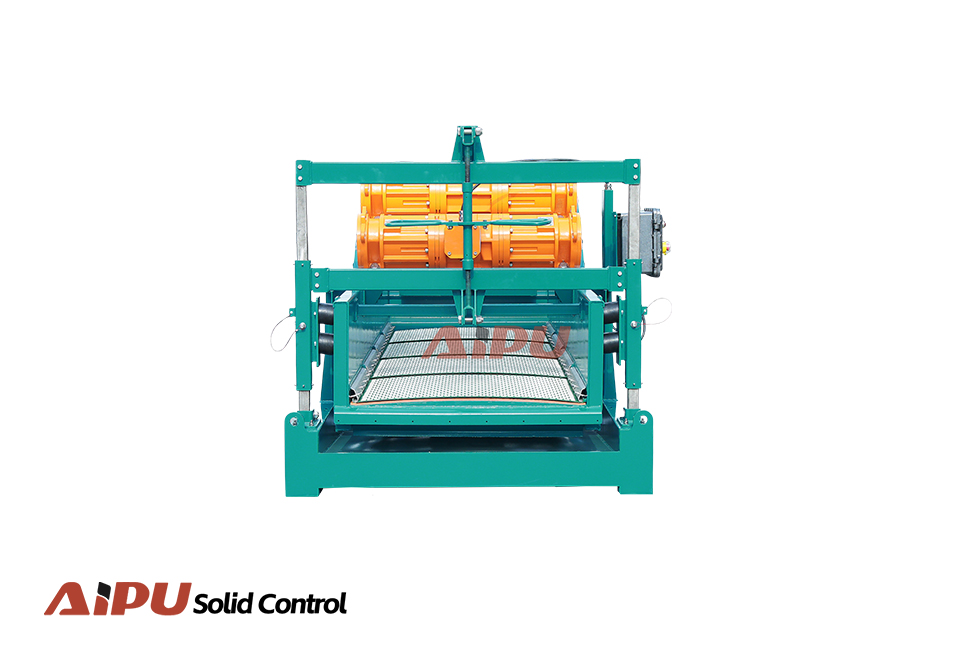
Advanced models, such as the AIPU Hunter-MGD Dual-Motion Shale Shaker, incorporate motors that allow switching between balanced elliptical and linear motion during operation. Elliptical motion is excellent for high-fluid recovery and sticky solids, while linear motion provides sharper cuttings conveyance for drier discharge. This adaptability, achievable with just two motors, allows operators to fine-tune performance in real-time for optimal solids removal and fluid handling under any condition, a feature highly valued in complex drilling environments. -
Optimized Screen Panel Design and Selection
Efficiency hinges on screen life and throughput. Innovations include composite framed screens for reduced weight and increased open area, and robust steel frames for heavy-duty applications. Offering a range of screen panel types (e.g., steel-framed or composite) and mesh configurations allows customization based on specific formation cuttings and fluid type. Proper tensioning systems are also crucial to prevent screen sagging and premature failure. -
Integration with Downstream Equipment
An efficient shaker is part of a cohesive system. For example, AIPU’s Hunter series mud cleaners integrate a shaker with desander and/or desilter cones in one unit. This design ensures that finer solids bypassed by the shaker screen are immediately processed by the hydrocyclones, creating a continuous, optimized separation process. The capacity of the shaker (e.g., models from 50m³/h to 420m³/h) must be correctly matched with the rig’s circulating rate and the capacity of downstream vacuums degassers and centrifuges.
The Ripple Effect: How an Efficient Shaker Improves the Entire System
-
Reduces Total Cost: By maximizing drilling fluid recovery, it drastically cuts mud replacement costs. It also lowers disposal costs by producing drier cuttings.
-
Protects Capital Equipment: Effective first-stage removal reduces abrasive wear on pumps, hydrocyclones, and centrifuges, extending their service life.
-
Enhances Drilling Safety & Performance: Cleaner fluid improves lubrication, reduces the risk of stuck pipe, and maintains optimal mud weight and rheology.
-
Improves Environmental Compliance: Drier waste solids and minimized fluid loss translate to a smaller environmental footprint and easier waste management.
Best Practices for Operational Excellence
-
Continuous Monitoring: Regularly check screen integrity, vibration G-force, and pool distribution.
-
Proactive Maintenance: Follow strict schedules for motor maintenance, deck angle adjustment, and tensioning system checks.
-
Operator Training: Ensure personnel understand the relationship between screen choice, vibration mode, and the mud properties.
-
Data-Driven Adjustments: Use performance data to select the right shaker model and configuration for the specific well plan.
Conclusion: Investing in Efficiency for Long-Term Gains
Shale shaker efficiency is a multiplier for drilling success. It transcends a simple equipment upgrade, representing a strategic focus on system synergy. By leveraging adaptive technologies like dual-motion vibration, optimizing screen management, and ensuring seamless integration within the solids control system, operators can unlock significant gains in cost reduction, operational safety, and environmental stewardship. In an industry where margins matter, investing in and optimizing shale shaker performance remains one of the most impactful decisions for efficient and responsible drilling.
If you are interested in our solid control equipment and systems, you can contact us through info@aipusolidcontrol.com Contact Us
