
In the drilling fluid purification process, efficient solids control is paramount for operational success. Two key pieces of equipment at the forefront of this process are the Shale Shaker and the Mud Cleaner. While often mentioned together, they serve distinct functions, operate at different stages, and target specific particle sizes. Understanding their differences, synergies, and optimal applications is crucial for designing an effective and cost-efficient solids control system.
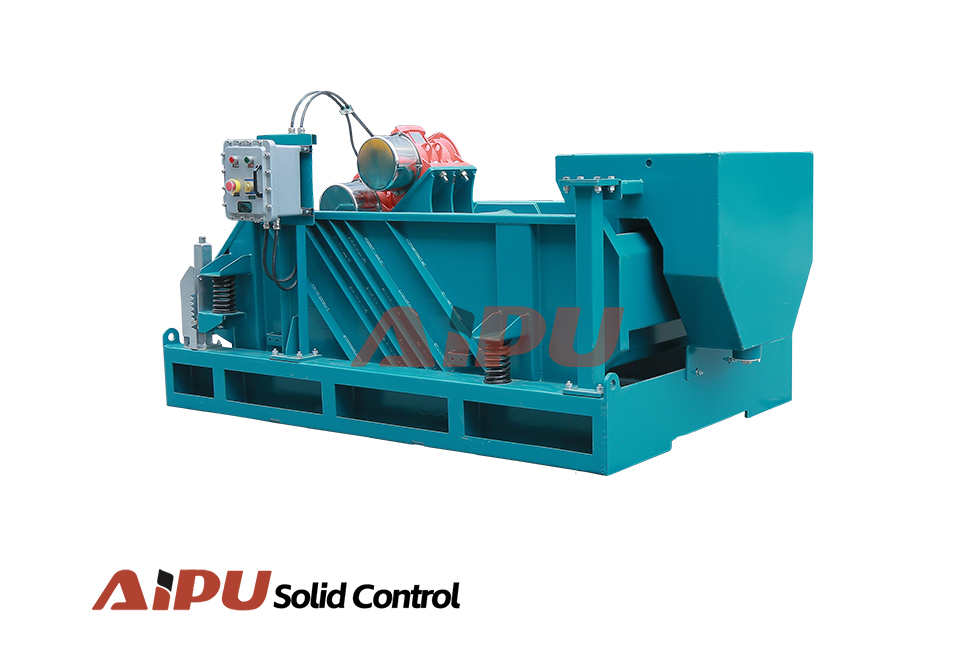

Shale Shaker: The Primary Defense
Function & Role:
The Shale Shaker is the first and primary stage of solids control. Its primary job is to perform a coarse separation, removing the largest and most abrasive drill cuttings (typically > 74 microns / 200 mesh) from the whole drilling fluid returning from the wellbore. Think of it as a high-intensity, vibrating filter screen.
How It Works:
-
Powered vibrating motors agitate screen panels at high frequency.
-
Drilling fluid is flowed onto the screens.
-
Larger solids are conveyed off the screen and discharged, while liquid and finer particles pass through.
-
Modern shakers, like the AIPU Hunter-MG series, offer features like adjustable deck angles and even dual-motion (Hunter-MGD) technology, allowing switching between elliptical motion (for high fluid recovery) and linear motion (for dry cuttings discharge).
Key Characteristics:
-
Stage: 1st Phase / Primary
-
Target Particle Size: > 74 μm (coarse solids, cuttings)
-
Purpose: Protect downstream equipment, recover maximum liquid, reduce overall load.
-
Output: “Pre-cleaned” mud (with finer solids) and discharged coarse cuttings.
Mud Cleaner: The Secondary Refiner
Function & Role:
A Mud Cleaner is a combined unit that performs the second and third stages of solids control. It integrates a fine-mesh shale shaker with a set of hydrocyclones (desanders and desilters). Its role is to remove finer, silt-sized solids that passed through the primary shaker.
How It Works:
-
Hydrocyclone Stage: The underflow from the primary shaker is pumped into the hydrocyclone cones. Centrifugal force inside the cones separates solids (typically 15-74 μm) from the liquid.
-
Fine Screening Stage: The concentrated solids and liquid slurry from the hydrocyclone underflow are discharged onto a fine-mesh screen on the integrated shaker deck. Here, the remaining liquid is recovered back to the active system, and the dry, fine solids are discarded.
Key Characteristics:
-
Stage: 2nd & 3rd Phase / Secondary & Tertiary
-
Target Particle Size: 15 – 74 μm (fine sands, silt)
-
Purpose: Further reduce solids content, maintain low mud weight and viscosity, recover valuable barite (in weighted mud).
-
Output: Ultra-cleaned drilling fluid and discharged fine solids. Models like the AIPU Hunter series (e.g., Hunter120, Hunter240) offer configurable cone counts and screen sizes.
Head-to-Head Comparison: Shale Shaker vs. Mud Cleaner
| Feature | Shale Shaker | Mud Cleaner |
|---|---|---|
| Primary Function | Coarse, primary separation of large cuttings. | Fine, secondary/tertiary separation of silt and sand. |
| Stage in Process | 1st Phase (Primary) | 2nd & 3rd Phase (Secondary/Tertiary) |
| Separation Method | Mechanical screening/vibration. | Centrifugal force (hydrocyclones) + fine screening. |
| Target Particle Size | > 74 microns (approx. 200 mesh and larger) | 15 – 74 microns (Desander: 44-74μm, Desilter: 15-44μm) |
| Equipment Complexity | Relatively simple (vibrating deck, screens, motors). | More complex (integrated pump, hydrocyclone bank, fine-screen shaker). |
| Typical Position | Directly after the flow line/possum belly. | After the shale shaker and degasser, before the centrifuge. |
| Key Benefit | Essential first defense; protects all downstream equipment; maximizes bulk fluid recovery. | Refines fluid quality; controls fine solids, crucial for mud properties and equipment efficiency. |
Synergy, Not Substitution: How They Work Together
It is vital to understand that a Mud Cleaner does not replace a Shale Shaker. Instead, they work in a critical sequence:
-
The Shale Shaker removes the bulk of the solids. If this step fails, the Mud Cleaner’s hydrocyclones would instantly plug and become useless.
-
The Mud Cleaner then takes the pre-cleaned fluid and removes the finer, abrasive solids that the primary shaker cannot catch. This protects downstream centrifuges and dramatically improves drilling fluid performance.
An inefficient primary shaker overwhelms the mud cleaner. An optimized system with both ensures maximum solids removal with minimal fluid loss.
Choosing the Right Solution for Your Operation
-
You need a Shale Shaker if: You are setting up the first line of defense for ANY drilling operation. It is non-negotiable for every rig.
-
You need a Mud Cleaner if:
-
Drilling in unconsolidated formations producing large volumes of fine sands/silt.
-
You need to maintain low mud weight and viscosity in water-based or non-weighted muds.
-
You are using weighted mud and need to recover barite from the shaker underflow.
-
You require superior fluid clarity for enhanced drilling rate and reduced equipment wear.
-
Conclusion
The Shale Shaker and Mud Cleaner are specialized, complementary warriors in the battle for clean drilling fluid. The shaker is the heavy infantry tackling the largest threats, while the mud cleaner is the specialized unit eliminating the finer, more pervasive dangers. Investing in the correct configuration and quality of both—such as the robust and adaptable AIPU Hunter series for each stage—ensures a cascading effect of benefits: lower drilling costs, reduced environmental waste, improved operational safety, and extended equipment life. A deep understanding of their distinct roles is the foundation of an intelligent and efficient solids control strategy.
If you are interested in our solid control equipment and systems, you can contact us through info@aipusolidcontrol.com Contact Us
