
No Competition—Complementary Functions
Confusion persists: “Is a mud cleaner better than a shale shaker?”
No. They serve distinct, sequential roles in solids control. One does not replace the other. This article clarifies their purposes, mechanics, and proper application—without marketing fluff.
No. They serve distinct, sequential roles in solids control. One does not replace the other. This article clarifies their purposes, mechanics, and proper application—without marketing fluff.
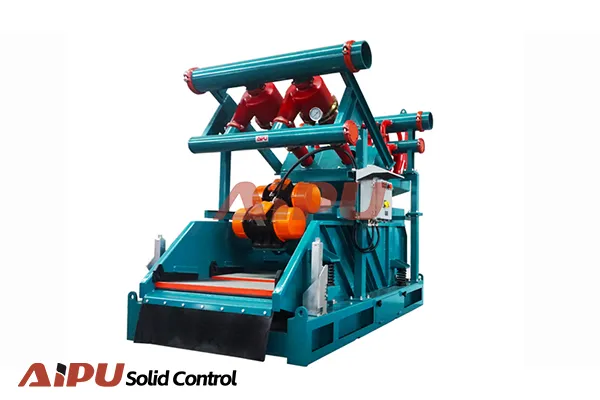

Core Definitions (No Ambiguity)
| Equipment | What It Actually Is | Primary Purpose |
|---|---|---|
| Shale Shaker | Vibrating screen unit with replaceable mesh screens | Remove large drilled solids (>74 μm) from all returning drilling fluid |
| Mud Cleaner | Hydrocyclone(s) + fine-mesh shaker mounted on a single skid | Remove fine drilled solids (15–74 μm) from weighted mud while recovering weighting material (barite) |
⚠️ Critical Clarification:
- “Mud cleaner” ≠ desander or desilter alone.
- It is specifically a hydrocyclone (typically desilter-sized) feeding a fine-screen shaker.
- Used only in weighted mud systems (density ≥1.4 g/cm³). Never used in unweighted mud.
Side-by-Side Technical Comparison
| Parameter | Shale Shaker | Mud Cleaner |
|---|---|---|
| Position in System | First stage (immediately after possum belly) | After shale shaker, before centrifuge (in weighted mud circuits) |
| Working Principle | Mechanical vibration + screen filtration | Hydrocyclone centrifugal separation + secondary screen filtration |
| Target Solids | Cuttings >74 μm (sand, coarse shale) | Low-gravity solids 15–74 μm mixed with barite in underflow |
| Fluid Handled | 100% of returning flow | Only hydrocyclone underflow (5–15% of total flow) |
| Screen Mesh Range | 20–300 mesh (selected per formation) | Fixed fine mesh: 150–250 mesh (optimized for barite passage) |
| Key Adjustment | G-force, deck angle, screen tension | Hydrocyclone feed pressure (25–35 psi), screen mesh selection |
| Maintenance Focus | Screen changes, spring/bearing checks, frame cleaning | Hydrocyclone liner wear, vortex finder alignment, screen tension |
| When Not Used | Never skipped | Omitted in unweighted mud (WBM/OBM without barite) |
How They Work Together: Weighted Mud Example
- Shale Shaker:
- Processes 100% of returning mud.
- Removes >90% of coarse cuttings (>150 μm).
- Clean overflow flows to mud tanks.
- Mud Cleaner Activation (only if mud is weighted):
- A portion of tank fluid is pumped to mud cleaner hydrocyclones.
- Hydrocyclone separates:
- Overflow: Cleaner fluid + fine barite → returns to tank
- Underflow: Concentrated solids (drilled solids + barite) → fed to its small shaker
- Fine shaker screen: Lets barite (<44 μm) pass back to tank; discharges larger drilled solids as waste.
- Result: Drilled solids removed; expensive barite recovered.
❌ If skipped:
- Without shale shaker → hydrocyclones clog instantly.
- Without mud cleaner in weighted mud → barite lost in desilter underflow or accumulates as harmful solids.
Practical Decision Guide
| Scenario | Required Equipment | Why |
|---|---|---|
| Water-based mud (unweighted) | Shale shaker → Desander → Desilter | No barite to recover; mud cleaner unnecessary |
| Oil-based mud (unweighted) | Shale shaker → Centrifuge | Fine solids controlled by centrifuge; no mud cleaner |
| Weighted mud (≥1.4 g/cm³) | Shale shaker → Mud cleaner → Centrifuge | Mud cleaner prevents barite loss while removing fines |
| High-solids formation + weighted mud | Shale shaker (coarse screen) → Mud cleaner (optimized mesh) | Prevents screen blinding; maximizes barite recovery |
Common Misconceptions Debunked
🔹 “Mud cleaner replaces the shale shaker.”
→ False. Mud cleaner processes only hydrocyclone underflow. Shale shaker handles 100% of returns. Remove shale shaker = system failure.
→ False. Mud cleaner processes only hydrocyclone underflow. Shale shaker handles 100% of returns. Remove shale shaker = system failure.
🔹 “Use mud cleaner for all fine solids removal.”
→ False. In unweighted mud, use desilter + centrifuge. Mud cleaner’s screen would unnecessarily discard fluid.
→ False. In unweighted mud, use desilter + centrifuge. Mud cleaner’s screen would unnecessarily discard fluid.
🔹 “Higher mesh on shale shaker eliminates need for mud cleaner.”
→ False. Overly fine shale shaker screens blind rapidly in weighted mud, causing fluid loss and downtime. Mud cleaner’s two-stage process is purpose-built for barite retention.
→ False. Overly fine shale shaker screens blind rapidly in weighted mud, causing fluid loss and downtime. Mud cleaner’s two-stage process is purpose-built for barite retention.
Field Tips for Reliability
- Shale shaker:
- Match screen mesh to dominant cuttings size (do a quick sieve test).
- Maintain proper tension—slack screens tear; overtightened screens crack frames.
- Mud cleaner:
- Monitor hydrocyclone feed pressure. Below 25 psi = poor separation; above 40 psi = excessive wear.
- Inspect vortex finder weekly for wear—misalignment causes barite loss.
- Select screen mesh based on barite size (typically 200 mesh allows barite passage while retaining drill solids).

Conclusion: Right Tool, Right Place
- Shale shaker: Non-negotiable first barrier. Handles bulk solids removal for any drilling fluid.
- Mud cleaner: Specialized solution only for weighted mud systems to balance solids removal and barite conservation.
Efficiency comes from understanding physics, not equipment hierarchy. Install shale shaker correctly. Add mud cleaner only when mud weight and solids profile justify it. Train crews on why each unit exists—not just how to operate it.
If you are interested in our solid control equipment and systems, you can contact us through info@aipusolidcontrol.com Contact Us
