
The global oil and gas drilling industry has witnessed a significant transformation in its supply chain over the past two decades, with Chinese manufacturers emerging as dominant players in the solids control equipment sector. Among the most critical pieces of drilling equipment, shale shakers serve as the first line of defense in removing drill cuttings from drilling fluid, directly impacting drilling efficiency, operational costs, and overall wellbore stability. As drilling operations expand into more challenging terrains and deeper formations worldwide, the demand for reliable, high-performance shale shakers has never been greater. This comprehensive guide explores the landscape of Chinese shale shaker manufacturers, examines the factors that distinguish quality producers from the competition, and provides actionable insights for drilling engineers, procurement specialists, and project managers seeking to source equipment from China’s thriving manufacturing sector.
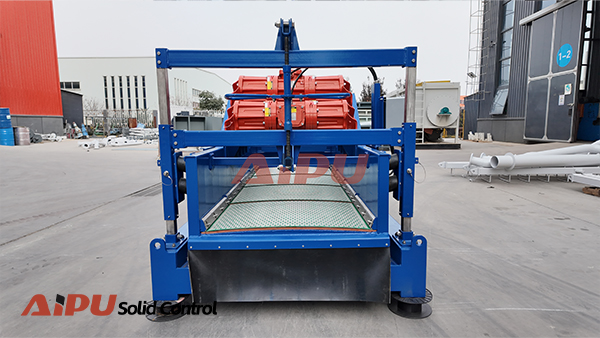

The Rise of Chinese Shale Shaker Manufacturing
China’s ascension as a global powerhouse in oilfield equipment manufacturing represents one of the most significant developments in the energy services industry over the past quarter century. What began as a domestic-focused industry serving the country’s rapidly expanding oil and gas exploration efforts has evolved into a sophisticated export-oriented sector supplying equipment to drilling operations across every major petroleum-producing region worldwide. The shale shaker segment exemplifies this transformation, with Chinese manufacturers moving from producing basic, commodity-grade equipment to engineering sophisticated, API-compliant systems that rival or exceed the quality offerings from traditional Western manufacturers.
The foundations of China’s shale shaker manufacturing strength rest upon several interconnected factors that collectively create a formidable competitive advantage. First, the country possesses an extensive industrial ecosystem capable of producing virtually every component required for shale shaker manufacturing, from precision-machined vibrator motors and specialized screen frames to advanced control systems and wear-resistant materials. This vertical integration eliminates supply chain dependencies on external suppliers and provides manufacturers with greater control over quality, and production timelines. Second, China’s vast domestic market, driven by aggressive expansion in unconventional oil and gas resources including shale oil, coalbed methane, and tight gas formations, has provided manufacturers with unparalleled opportunities to refine their products through real-world application and continuous iteration.
The evolution of Chinese shale shaker manufacturing has proceeded through distinct phases that have shaped the industry’s current capabilities. Early manufacturers focused primarily on replicating designs from established Western companies, producing compatible replacement parts and basic equipment models for price-sensitive domestic markets. This foundational period established manufacturing competencies and quality control processes while creating a deep pool of engineering talent familiar with solids control technology. The subsequent phase witnessed the emergence of manufacturers investing in proprietary research and development, developing motion types and screen configurations specifically optimized for the challenging drilling conditions prevalent in China’s unconventional resource plays. Today, leading Chinese manufacturers have achieved technological parity with Western counterparts while maintaining significant advantages in manufacturing efficiency, supply chain responsiveness, and lifecycle cost management.
Why Choose Chinese Manufacturers for Oilfield Equipment
The decision to source shale shakers from Chinese manufacturers encompasses a range of strategic considerations that extend far beyond simple price comparisons. While cost competitiveness remains an important factor, the most compelling reasons for choosing Chinese suppliers relate to the comprehensive value proposition they offer, encompassing quality, technology, support infrastructure, and long-term partnership potential.
Quality and Technical Excellence
Contemporary Chinese shale shaker manufacturers have demonstrated that they can produce equipment meeting or exceeding international standards for performance, reliability, and safety. Leading manufacturers maintain certifications including ISO 9001 for quality management systems, API Q1 for petroleum industry quality programs, and compliance with API RP 13C standards for screen testing and classification. These certifications reflect systematic approaches to quality control that ensure consistency across production batches and continuous improvement in manufacturing processes. Beyond certifications, manufacturers invest in advanced testing facilities where shale shakers undergo rigorous performance validation under simulated drilling conditions, including accelerated life testing, fatigue analysis, and flow capacity verification.
The technical capabilities of Chinese manufacturers have expanded dramatically as they’ve accumulated experience across diverse drilling applications. Engineers at leading manufacturers have developed specialized expertise in motion dynamics, enabling them to optimize vibration patterns for specific drilling scenarios. Linear motion shakers designed for high-volume primary separations, balanced elliptical motion shakers engineered for fine mesh applications in sensitive formations, and specialized configurations for ultra-deep drilling operations all represent examples of Chinese manufacturers’ technical maturation. This application-specific design approach ensures that equipment performs optimally in the particular conditions it will encounter in service, maximizing separation efficiency and minimizing unnecessary energy consumption.
Manufacturing Capacity and Supply Chain Resilience
Chinese manufacturers benefit from manufacturing infrastructure that far exceeds the scale available from most competitors. Production facilities spanning tens of thousands of square meters equipped with advanced CNC machining centers, automated welding systems, and precision assembly lines enable manufacturers to fulfill large orders with shorter lead times than smaller-scale competitors can match. This manufacturing capacity proves particularly valuable during periods of elevated drilling activity when demand for solids control equipment surge across the industry simultaneously.
The supply chain ecosystems surrounding Chinese shale shaker manufacturers provide additional advantages in terms of component availability and parts supply. Manufacturers maintain extensive inventories of replacement screens, vibrator motors, and other wear components, enabling rapid fulfillment of spare parts orders that minimize equipment downtime. This parts availability extends throughout equipment lifespans, addressing a common concern among equipment owners regarding long-term support for purchased machinery. Furthermore, the ability to source components domestically eliminates vulnerabilities to international supply chain disruptions that have affected equipment availability from manufacturers reliant on global parts procurement.
Cost-Effectiveness and Total Cost of Ownership
While the initial purchase price of Chinese-manufactured shale shakers typically undercuts equivalent equipment from Western manufacturers by significant margins, the true value proposition becomes apparent when evaluating total cost of ownership over equipment lifespans. Chinese manufacturers achieve cost advantages through manufacturing efficiency, lower labor costs, and supply chain integration without necessarily compromising quality when proper suppliers are selected. These savings translate directly to improved project economics, enabling operators to allocate capital to other value-adding activities while maintaining equipment standards required for successful drilling operations.
The cost-effectiveness of Chinese shale shakers extends beyond acquisition cost to encompass operational efficiency, maintenance requirements, and equipment longevity. Modern Chinese-designed shakers incorporate energy-efficient drive systems, optimized screen geometries, and durable construction that collectively reduce operating costs over equipment service lives. Replacement screens and components from Chinese manufacturers typically cost significantly less than OEM parts from Western equipment brands while delivering comparable performance, reducing ongoing consumable expenses that constitute a substantial portion of solids control operational budgets.
Key Factors in Selecting a Chinese Shale Shaker Manufacturer
The proliferation of Chinese manufacturers claiming to produce high-quality shale shakers necessitates careful evaluation to distinguish genuinely capable suppliers from those offering inferior products. Drilling operations depend upon shale shaker performance for successful wellbore construction, making equipment selection a decision with far-reaching operational and financial implications. The following factors provide a framework for evaluating Chinese manufacturers and identifying partners capable of delivering equipment meeting operational requirements.
Technical Expertise and Engineering Capabilities
The depth of a manufacturer’s engineering capabilities serves as a primary indicator of their ability to produce equipment that performs reliably in demanding drilling applications. Manufacturers with robust engineering departments employ qualified mechanical, electrical, and chemical engineers who understand the complex interactions between drilling fluid properties, formation characteristics, and solids separation requirements. These engineering teams should demonstrate capability in advanced analysis techniques including finite element analysis for structural optimization, computational fluid dynamics for flow distribution modeling, and dynamic simulation for vibration performance prediction.
When evaluating engineering capabilities, prospective buyers should examine manufacturers’ track record in developing new products and adapting existing designs to evolving industry requirements. Manufacturers actively engaged in addressing emerging drilling challenges, such as managing ultra-high-density drilling fluids for deepwater applications or achieving fine particle separation in sensitive reservoir formations, demonstrate the technical agility required to support diverse operational needs. Documentation of engineering processes, including design review procedures, prototype testing protocols, and production qualification methods, indicates systematic approaches to product development that reduce risks of performance shortfalls in field applications.
Quality Management and Certification
Rigorous quality management systems form the foundation of consistent equipment manufacturing, ensuring that every shaker produced meets design specifications and performs as expected. Manufacturers should maintain current certifications from recognized international standards organizations, with ISO 9001 representing the baseline expectation for quality management maturity. More demanding certifications, including API Q1 registration and ISO 14001 for environmental management, indicate commitment to comprehensive quality and sustainability practices that extend beyond minimum requirements.
Beyond certifications, effective quality management requires systematic processes throughout manufacturing operations, from incoming material inspection through final assembly and testing. Manufacturers should document their quality control procedures and demonstrate capability to trace materials and components through production, enabling rapid identification and resolution of any quality issues that arise. Transparency regarding quality metrics, including defect rates, warranty claims, and field performance data, provides objective evidence of manufacturing effectiveness that supplements claims of quality commitment.
Manufacturing Infrastructure and Production Capability
The physical infrastructure supporting shale shaker manufacturing directly impacts production capacity, quality consistency, and delivery reliability. State-of-the-art manufacturing facilities incorporate precision machining equipment capable of achieving tight tolerances on critical components, automated welding systems that ensure structural integrity, and specialized coating facilities that provide corrosion protection essential for equipment operating in harsh drilling environments. Facility design should support efficient material flow while maintaining appropriate separation between operations to prevent contamination and ensure proper processing sequence.
Production capacity evaluation should encompass both maximum output capability and flexibility to accommodate varying order sizes and delivery requirements. Manufacturers with capacity to produce multiple shaker configurations simultaneously demonstrate versatility valuable when procurement programs encompass diverse equipment needs. Additionally, manufacturers should maintain adequate capacity reserves to accommodate demand fluctuations without sacrificing quality or extending delivery timelines beyond commitments. Facility tours, whether conducted virtually or in-person, provide opportunities to assess manufacturing infrastructure firsthand and verify claims regarding production capabilities.
After-Sales Support and Service Network
The relationship between equipment manufacturers and customers extends significantly beyond equipment delivery, with after-sales support playing a crucial role in operational success and long-term satisfaction. Manufacturers committed to customer success maintain comprehensive support infrastructure including technical documentation, spare parts availability, and service personnel capable of addressing operational issues and maintenance requirements. This support infrastructure proves particularly important when equipment operates in remote locations where rapid response to technical issues can significantly impact drilling progress.
Evaluation of after-sales support should examine manufacturers’ global service network, parts distribution strategies, and technical support capabilities. Manufacturers with established distribution networks in major drilling regions can provide rapid parts availability that minimizes equipment downtime. Technical support teams should demonstrate deep product knowledge and practical experience with drilling applications, enabling them to provide actionable guidance when operational challenges arise. Furthermore, manufacturers should offer training programs that enable customer personnel to perform routine maintenance and basic troubleshooting, reducing dependence on manufacturer support for routine issues.
AIPU Solid Control: A Leading Chinese Manufacturer
Among the Chinese manufacturers serving the global oilfield drilling industry, AIPU Solid Control has established itself as a leading provider of high-quality solids control equipment, including comprehensive shale shaker solutions designed for demanding drilling applications worldwide. The company’s commitment to engineering excellence, manufacturing quality, and customer service has positioned it as a preferred supplier for drilling operations seeking reliable equipment from Chinese manufacturers.
Company Background and Industry Experience
AIPU Solid Control brings decades of experience in designing and manufacturing solids control equipment for the international oil and gas drilling industry. The company’s expertise encompasses the full range of solids control equipment required for modern drilling operations, including linear motion shale shakers, balanced elliptical motion shakers, mud cleaners, decanter centrifuges, and complete solids control systems. This comprehensive product portfolio enables AIPU to serve as a single-source supplier for drilling contractors and operators seeking to standardize equipment specifications across their operations.
The company’s manufacturing facilities incorporate advanced production technologies and rigorous quality control processes that ensure consistent equipment performance. Production capacity enables AIPU to fulfill both small orders for specific equipment needs and large-scale procurement programs for major drilling campaigns. Manufacturing operations maintain certifications including ISO 9001 for quality management, demonstrating systematic approaches to quality assurance that underpin equipment reliability.
Product Range and Technical Solutions
AIPU’s shale shaker portfolio addresses diverse drilling requirements through multiple product families optimized for different applications. The Hunter series represents AIPU’s flagship linear motion shale shaker line, featuring advanced vibration dynamics that deliver high-capacity solids separation while maintaining reliable operation in demanding drilling conditions. These shakers incorporate AIPU’s proprietary screen tensioning systems and optimized deck geometries that maximize separation efficiency and simplify screen changes during operation.
For applications requiring finer separation performance, AIPU offers balanced elliptical motion shakers that combine the capacity advantages of linear motion designs with improved fine particle separation capabilities. These shakers feature precisely engineered elliptical vibration patterns that enhance cuttings conveyance while providing additional time for fine particles to pass through screens, improving overall separation efficiency for sensitive drilling operations.
The Hunter-MG series represents AIPU’s latest-generation shale shaker technology, incorporating advanced features including variable frequency drive systems for optimized vibration control, intelligent monitoring capabilities for predictive maintenance, and modular construction enabling flexible configuration to meet specific installation requirements. These shakers reflect AIPU’s ongoing investment in research and development to address evolving industry needs and maintain technological leadership.
Quality Certifications and Standards Compliance
AIPU maintains comprehensive certifications demonstrating compliance with international quality and safety standards applicable to oilfield equipment manufacturing. The company’s quality management system operates under ISO 9001 certification, ensuring systematic approaches to design, manufacturing, and service delivery that consistently meet customer requirements. Equipment designs comply with applicable API standards, including API RP 13C for shaker screen classification and API specifications for equipment construction and performance.
Manufacturing processes incorporate extensive quality control procedures including incoming material inspection, in-process verification, and final performance testing. Each shale shaker undergoes comprehensive testing prior to shipment, verifying vibration performance, structural integrity, and electrical system functionality. This testing regimen ensures that equipment arrives at customer locations ready for productive operation, minimizing startup issues and accelerating transition to full service.
Global Support Infrastructure
AIPU has developed a global support infrastructure enabling responsive service for customers operating drilling equipment worldwide. Parts distribution centers strategically located in major drilling regions maintain inventory of critical components, enabling rapid fulfillment of spare parts orders that minimize equipment downtime. Technical support teams provide assistance for installation, operation, and troubleshooting, drawing upon extensive experience with solids control applications across diverse drilling environments.
The company’s commitment to customer success extends to comprehensive documentation and training resources that enable customer personnel to operate and maintain equipment effectively. Operation manuals, maintenance guides, and instructional materials provide reference information supporting equipment lifecycle management. Training programs, conducted at customer locations or AIPU facilities, build customer capabilities for routine maintenance and operational optimization, reducing dependence on manufacturer support for day-to-day equipment management.
Making Informed Procurement Decisions
Selecting a Chinese shale shaker manufacturer requires balanced evaluation of multiple factors aligned with specific operational requirements and organizational priorities. The following guidance provides a framework for approaching procurement decisions that maximizes likelihood of successful equipment sourcing.
Defining Requirements and Specifications
Effective procurement begins with clear articulation of equipment requirements based on anticipated operating conditions and performance expectations. Parameters including expected drilling fluid circulation rates, target separation sizes, available installation space, power supply characteristics, and environmental conditions all influence appropriate equipment selection. Precise specification of these requirements enables meaningful comparison between manufacturer offerings and identification of equipment best suited to intended applications.
Requirements definition should encompass not only immediate operational needs but also considerations for future flexibility and lifecycle expectations. Equipment specifications that accommodate potential changes in drilling programs, screen availability for long-term operation, and manufacturer support commitments throughout equipment service life contribute to procurement decisions that deliver sustained value rather than short-term savings followed by operational constraints.
Evaluating Manufacturer Capabilities
Manufacturer evaluation should systematically assess capabilities across the factors identified earlier in this guide, gathering objective evidence to support procurement decisions. Site visits, whether virtual or in-person, provide opportunities to assess manufacturing infrastructure, quality processes, and organizational capabilities directly. References from existing customers operating similar equipment in comparable applications offer valuable perspectives on real-world performance and manufacturer support effectiveness.
Technical evaluation should examine not only current product offerings but also manufacturer capabilities for custom engineering and application-specific modifications. Drilling operations frequently present unique requirements that standard equipment cannot fully address, making manufacturer flexibility an important consideration for comprehensive procurement programs. Manufacturers demonstrating engineering creativity and willingness to collaborate on custom solutions provide long-term partnership potential beyond individual equipment transactions.
Managing Risk and Ensuring Success
Procurement decisions involve inherent risks that effective strategies can mitigate. Payment terms structured to align with milestone achievements, performance guarantees tied to equipment specifications, and warranty provisions providing protection against early-life failures all contribute to risk management approaches that protect buyer interests. Clear contractual specifications, agreed testing protocols, and defined acceptance criteria provide objective frameworks for verifying equipment performance prior to final payment.
Pilot installations offer valuable opportunities to validate equipment performance and manufacturer support capabilities before committing to larger procurement programs. Initial orders incorporating evaluation phases enable assessment of equipment under actual operating conditions, identification of any adaptation requirements, and development of operational procedures before additional equipment enters service. This measured approach reduces risks associated with large-scale equipment sourcing while building organizational familiarity with equipment and manufacturer relationships.
Conclusion
The Chinese shale shaker manufacturing industry has matured into a sophisticated sector capable of supplying equipment meeting the demanding requirements of modern oil and gas drilling operations. Manufacturers across China offer diverse capabilities spanning the quality spectrum, from commodity producers focused primarily on price competitiveness to engineering-focused companies delivering equipment that rivals or exceeds offerings from traditional Western suppliers. This diversity creates both opportunities and challenges for buyers seeking to source equipment from Chinese manufacturers, requiring careful evaluation to identify partners capable of delivering equipment that meets operational requirements.
AIPU Solid Control exemplifies the capabilities of leading Chinese manufacturers, offering comprehensive shale shaker solutions backed by engineering expertise, manufacturing quality, and global support infrastructure. The company’s commitment to equipment performance and customer success makes it a preferred partner for drilling operations seeking reliable solids control equipment from Chinese manufacturers. Organizations considering Chinese shale shaker procurement should evaluate AIPU alongside other manufacturers, comparing capabilities against their specific requirements to identify optimal sourcing partners.
The strategic value of sourcing from capable Chinese manufacturers extends beyond immediate cost savings to encompass access to manufacturing scale, supply chain resilience, and technical expertise that can enhance drilling operations over equipment lifecycles. As the global drilling industry continues its evolution toward more challenging unconventional resources and deeper offshore formations, the role of reliable, high-performance solids control equipment becomes increasingly critical. Partnerships with capable Chinese manufacturers like AIPU provide access to equipment and support enabling successful drilling operations worldwide.
If you are interested in our solid control equipment and systems, you can contact us through info@aipusolidcontrol.com Contact Us
