
A shale shaker is the primary and most fundamental piece of solids control equipment in oil and gas drilling operations, serving as the first line of defense for drilling fluid (mud) purification. As the core component of the drilling mud solids control system, it undertakes the critical task of separating large-diameter solid particles (such as drill cuttings, shale, and sand) from drilling fluid through mechanical vibration, realizing the initial solid-liquid separation of drilling mud. Its efficient operation not only ensures the performance stability of drilling fluid but also reduces the load of subsequent solids control equipment (e.g., desander, desilter, mud cleaner), and further cuts down drilling costs and environmental pollution caused by drilling waste.
The Core Working Principle of a Shale Shaker
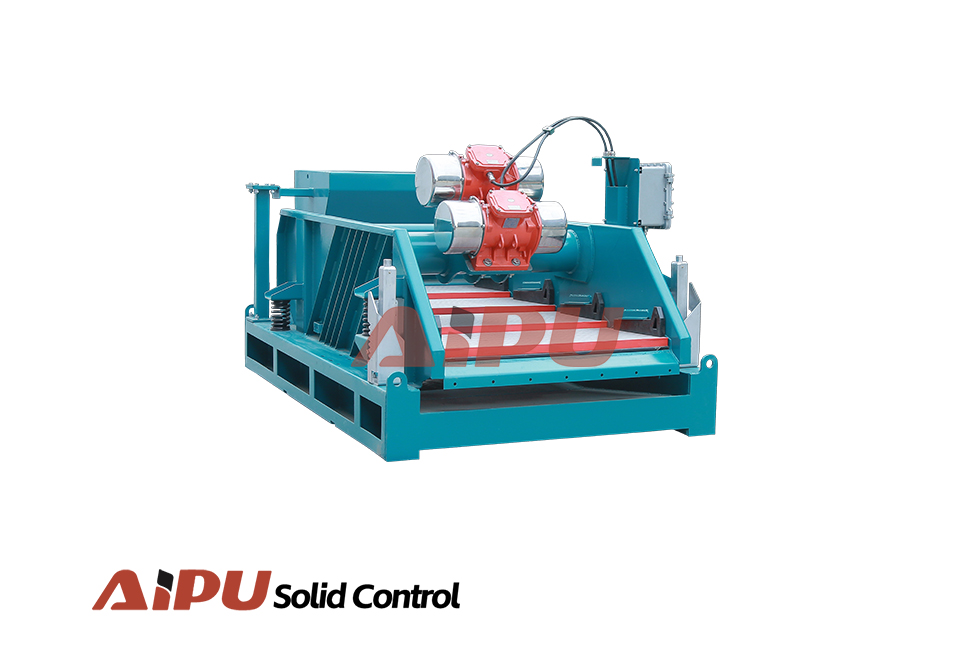
Shale shakers operate on the principle of mechanical vibratory separation. The equipment is mainly composed of a vibrating screen box, vibration exciter, screen mesh, base frame, and drive system. When in operation, the vibration exciter drives the screen box to generate high-frequency and high-amplitude vibration (the vibration trajectory can be linear, elliptical, or dual motion according to design). Drilling fluid containing solid cuttings is evenly distributed on the inclined screen mesh surface. Under the combined action of vibration force and gravity, the liquid phase of the drilling fluid passes through the screen mesh pores and flows back to the mud tank for recycling, while the larger solid phase particles that cannot pass through the screen mesh move along the inclined screen surface to the discharge end and are removed from the equipment.
The key to the separation effect of a shale shaker lies in three core factors: the vibration parameters (vibration frequency, amplitude, G-force), the screen mesh performance (mesh size, effective screen area, material), and the screen box angle (adjustable to adapt to different drilling fluid viscosity and solid content). Reasonable matching of these parameters can maximize the separation efficiency and treating capacity of the equipment.
Main Types of Shale Shakers
According to the vibration trajectory, structural design, and application scenarios, shale shakers are mainly divided into the following types, each with unique characteristics and applicable working conditions:
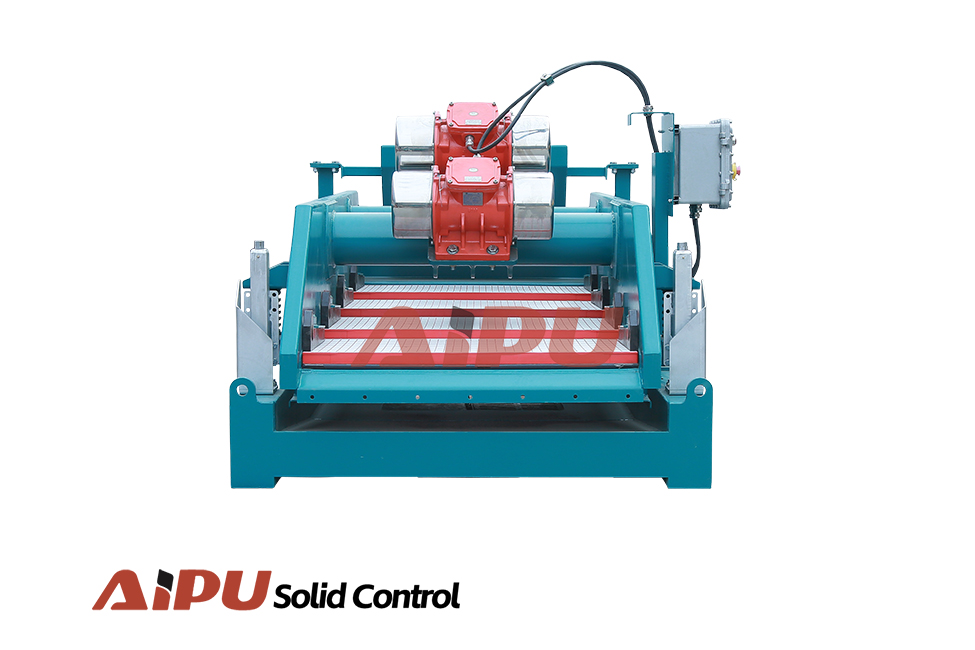
1. Linear Motion Shale Shaker
It generates linear vibration along the direction of the screen surface, with the advantages of fast solid particle discharge, high screening efficiency, and good adaptability to high-solid-content drilling fluid. It is the most widely used type in conventional oil and gas drilling operations, suitable for the initial separation of most onshore and offshore drilling cuttings.

2. Elliptical Motion Shale Shaker
The screen box presents an elliptical vibration trajectory, combining the advantages of linear and circular vibration. The horizontal component of the ellipse accelerates the discharge of solid particles, and the vertical component enhances the penetration of drilling fluid through the screen mesh, which is more suitable for drilling fluid with high viscosity and large cuttings content. It can effectively prevent screen mesh blockage and improve the overall treating capacity.
3. Dual-Motion Shale Shaker
As an upgraded and innovative type of shale shaker, it can flexibly switch between linear and elliptical vibration trajectories during operation without stopping the machine. This type of shale shaker is equipped with a special vibration motor and a smart adjustment system, which can adapt to the real-time changes of drilling fluid properties and drilling working conditions (such as the switch between oil-based mud and water-based mud). It is a high-end product widely used in complex drilling scenarios such as deep wells, ultra-deep wells, and unconventional oil and gas development (shale gas, coal bed methane), and is highly recognized in European, Middle Eastern and other international high-standard drilling markets.
4. Specialized Shale Shaker
In addition to the above conventional types, there are also customized specialized shale shakers for specific scenarios, such as dry shaker (for drying drilling cuttings to reduce moisture content) and tandem shale shaker (double or triple tandem structure, with larger effective screen area and higher treating capacity) for large-displacement drilling operations.
Key Performance Characteristics of a High-Quality Shale Shaker
A professional and high-performance shale shaker for oil and gas drilling needs to have the following core performance characteristics, which are also the key indicators for evaluating the quality of the equipment:
- High treating capacity: It can handle large flow rates of drilling fluid to adapt to the high-speed drilling operation requirements, and the effective treating capacity can reach tens to hundreds of cubic meters per hour according to the model.
- Large effective screen area: A larger screen area can increase the contact area between drilling fluid and the screen mesh, reduce the unit area load, and improve the separation efficiency while avoiding screen mesh blockage.
- Adjustable screen box angle: The inclination angle of the screen box can be flexibly adjusted (usually in the range of -3° to +5°) to adapt to different drilling fluid viscosity, solid particle size and content, and optimize the discharge speed of cuttings and the penetration speed of drilling fluid.
- Quick-replace screen design: The screen mesh adopts a fast disassembly and assembly structure, which can realize quick replacement of the screen mesh in the field without complex tools, reducing equipment downtime and improving drilling operation efficiency.
- Low maintenance cost: Adopt high-quality raw materials and heat treatment technology, with few wearing parts and high structural stability. The key components (such as vibration motor, bearing) use well-known brand products to reduce the frequency of maintenance and replacement.
- Strong corrosion and wear resistance: The contact parts with drilling fluid are coated with anti-abrasion and anti-corrosion coatings, and stainless steel fasteners are used, which can adapt to the harsh working environment of oil-based mud, water-based mud and even hydrogen sulfide-containing drilling fluid, and extend the service life of the equipment.
- Low noise and stable operation: The optimized vibration damping structure and high-precision dynamic balance testing ensure the stable operation of the equipment, reduce the noise generated during work (generally ≤85db), and improve the on-site operation environment.
The Important Role of Shale Shaker in Oil and Gas Drilling Operations
As the first-stage solids control equipment of the drilling mud system, the shale shaker is the foundation of the entire solids control process, and its role runs through the whole oil and gas drilling operation, which is mainly reflected in the following aspects:
1. Purify drilling fluid and ensure drilling safety
By removing large solid particles in the drilling fluid, the shale shaker maintains the optimal performance (density, viscosity, fluid loss, etc.) of the drilling fluid, ensuring that the drilling fluid can effectively cool the drill bit, lubricate the drill string, balance the formation pressure, and prevent well collapse, blowout and other drilling accidents.
2. Reduce the load of subsequent solids control equipment
The efficient initial separation of the shale shaker reduces the solid content of the drilling fluid entering the subsequent desander, desilter, mud cleaner and centrifuge, avoiding the overload operation of subsequent equipment, improving their separation efficiency and service life, and reducing the overall operation and maintenance cost of the solids control system.
3. Recycle drilling fluid and reduce drilling costs
The purified drilling fluid is recycled to the mud tank, which greatly reduces the loss of drilling fluid and the consumption of drilling fluid materials (such as bentonite, barite), and cuts down the cost of drilling fluid preparation and waste treatment. At the same time, the separated drill cuttings can be further treated (such as by cuttings dryer), which realizes the resource utilization of waste and further reduces the drilling cost.
4. Environmental protection and compliance with drilling regulations
With the increasingly strict environmental protection requirements for oil and gas drilling, the shale shaker effectively reduces the discharge of drilling waste by separating solid and liquid phases of drilling fluid. The separated drill cuttings can be treated in a centralized manner to meet the environmental protection standards of on-site “no pooling, reduction and zero emission”, avoiding soil and water pollution caused by random discharge of drilling waste.
Application Scenarios of Shale Shaker
Shale shakers are not only the core equipment of onshore and offshore oil and gas drilling operations but also widely used in various drilling and engineering fields that require mud solid-liquid separation, including:
- Conventional oil and gas well drilling (onshore, offshore platform, shallow sea);
- Unconventional oil and gas development (shale gas, coal bed methane, tight oil and gas drilling);
- Deep well and ultra-deep well drilling operations;
- Geothermal well drilling, water well drilling;
- Municipal construction slurry separation, mining core solids removal and other engineering fields.
In different application scenarios, the shale shaker can be customized and configured according to the characteristics of drilling fluid (oil-based mud, water-based mud, synthetic-based mud), solid particle size, and treating capacity requirements to ensure the best separation effect.
How to Select a Suitable Shale Shaker?
The selection of a shale shaker needs to be based on the actual drilling working conditions and requirements, and the following key factors should be comprehensively considered:
- Drilling fluid type and properties: For high-viscosity oil-based mud, an elliptical motion or dual-motion shale shaker is preferred; for conventional water-based mud, a linear motion shale shaker can meet the requirements with higher cost performance.
- Drilling operation scale and treating capacity: Large-displacement drilling and deep well drilling need to select a shale shaker with large effective screen area and high treating capacity, or a tandem shale shaker (double/triple); small and medium-sized drilling operations can select a compact mini shale shaker.
- Formation characteristics and solid particle size: For formations with large cuttings content and large particle size, a shale shaker with high G-force, large amplitude and adjustable screen box angle is selected to ensure the rapid discharge of cuttings; for fine particle formations, the screen mesh with appropriate mesh size is matched to improve the separation precision.
- On-site working environment: For drilling environments with harsh conditions such as high temperature, high pressure and hydrogen sulfide, a shale shaker with corrosion and wear resistance, explosion-proof certification (ATEX, IECEX) is selected.
- Customization and after-sales service: Choose a manufacturer that can provide flexible configuration customization (such as motor brand, screen mesh material, surface color) and perfect after-sales service, to ensure that the equipment can be adjusted and maintained in a timely manner according to the on-site changes.
The Future Development Trend of Shale Shaker
With the continuous development of oil and gas drilling technology (such as the rapid development of unconventional oil and gas, deep sea drilling) and the increasingly strict environmental protection and energy-saving requirements, the shale shaker is moving towards the direction of intellectualization, high efficiency, energy saving and multi-functionalization:
- Intelligent control: Equipped with an intelligent sensor and automatic adjustment system, it can real-time monitor the vibration parameters, screen mesh blockage and drilling fluid properties, and automatically adjust the vibration trajectory, screen box angle and other parameters to realize unmanned operation and remote monitoring.
- High efficiency and energy saving: Optimize the structural design and vibration system, adopt high-efficiency and low-power consumption motors, reduce the energy consumption of the equipment while improving the treating capacity and separation efficiency, and realize the energy-saving and emission-reduction of the solids control system.
- Multi-functional integration: Integrate the functions of drying, screening and conveying, and combine with other solids control equipment (such as mud cleaner) to form an integrated solids control unit, which reduces the occupied area of the equipment and improves the integration level of the on-site system.
- Environmental protection and high performance: Use more environmentally friendly and high-performance materials (such as composite screen mesh, high corrosion-resistant alloy materials) to improve the service life of the equipment and the separation effect, and further meet the environmental protection requirements of drilling waste treatment.
As the core equipment of drilling mud solids control, the shale shaker will always play an irreplaceable role in the oil and gas drilling industry. With the continuous innovation and upgrading of technology, its performance and function will be further improved, providing more efficient, economical and environmental protection support for the high-quality development of the global oil and gas drilling industry.
If you are interested in our solid control equipment and systems, you can contact us through info@aipusolidcontrol.com Contact Us
