
The First Line of Defense in Drilling Operations
In the high-stakes world of oil and gas drilling, horizontal directional drilling (HDD), and mining exploration, the management of drilling fluid—often called “mud”—is paramount to success and safety. But as a drill bit chews through thousands of feet of rock, it inevitably brings large chunks of crushed material, known as drill cuttings, back to the surface. If left unchecked, these solids ruin expensive equipment, slow down drilling rates, and create environmental hazards.
This is where the shale shaker enters the picture. It is not a glamorous piece of machinery, but it is arguably the most critical component in the solids control system. Without a functioning shale shaker, the entire drilling operation grinds to a halt.
This article provides a deep, professional dive into the definition, mechanics, components, and importance of the shale shaker, optimized for industry professionals and students alike.
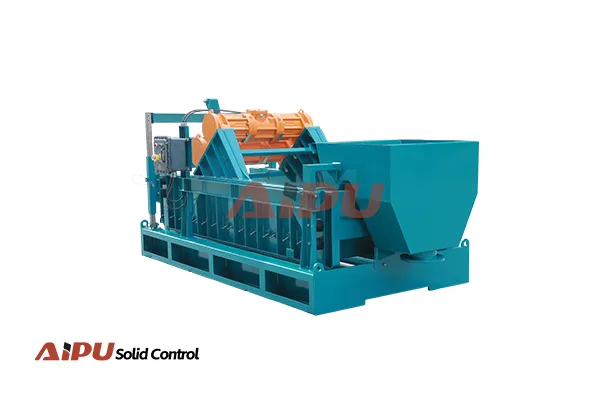

Chapter 1: Defining the Shale Shaker
What exactly is a Shale Shaker?
A shale shaker is a general term for a vibrating device used in the oil and gas industry to remove large solids (cuttings) from the drilling fluid. In technical terms, it is the first-stage solids control equipment that utilizes a vibrating screen mesh to separate coarse particles from the liquid phase of the mud system.
Think of it as a massive, industrial-strength sieve that operates under extreme vibration. The drilling mud, laden with rocks, sand, and clay, is poured onto a sloped, vibrating screen. The liquid mud passes through the tiny openings in the screen (returning to the active mud system for reuse), while the solid cuttings vibrate off the end of the screen and are discarded into a reserve pit or collection bin.
Key Function: To remove solids larger than 75-100 microns (depending on screen mesh size) before the fluid proceeds to finer separation equipment like desanders, desilters, or centrifuges.
Chapter 2: How Does a Shale Shaker Work? The Physics of Separation
The efficiency of a shale shaker relies on a combination of gravity, motion, and mechanical design. Here is the step-by-step process:
-
Fluid Intake: Drilling mud returning from the wellbore flows through a possum belly (a receiving tank/flow distributor) and onto the feeder pan. This step is crucial for spreading the flow evenly across the entire width of the screen, preventing localized overloading.
-
Vibration & Stratification: A motor (or motors) spins eccentric weights, creating a specific pattern of vibration—usually linear, elliptical, or circular motion. This violent shaking causes the solids to stratify: heavier, larger cuttings sink to the screen surface while lighter fluid rises.
-
Filtration: The screen acts as a barrier. The G-force generated by the shaker (typically between 4G and 8G) forces the liquid mud through the API screen mesh. The conductance of the screen determines how easily fluid flows through.
-
Conveyance: The angle of the shaker deck (adjustable on modern rigs) combined with the vibration pattern causes the solids to “walk” or “hop” up the deck toward the discharge end.
-
Discharge: The dewatered solids fall off the back of the shaker as dry cuttings, ready for disposal or further treatment.
Chapter 3: Critical Components of a Shale Shaker
Understanding the anatomy of the shaker is key to optimizing its performance.
-
Shaker Deck / Basket: The structural frame that holds the screens. It must be rigid enough to transmit vibration uniformly without cracking.
-
Vibrator Motors: The heart of the shaker. Modern shakers use explosion-proof vibratory motors. The number of motors and their positioning determines the motion type:
-
Linear Motion: Best for high G-force and fluid handling capacity.
-
Elliptical/Balanced Elliptical Motion: Offers superior solids conveyance, especially with sticky clays.
-
-
Shaker Screens: The most critical consumable. They are rated by API Number (API RP 13C) . The higher the API number (e.g., API 200 vs. API 100), the finer the screen and the smaller the particle it can remove.
-
Layered Design: Modern screens are often 3D or pyramid screens, which increase the open surface area, allowing more fluid to pass through per second (higher capacity).
-
-
Deck Angle Adjustment: A hydraulic or pneumatic mechanism that allows the operator to change the slope of the deck. A steeper angle slows down the cuttings travel speed, allowing for drier cuttings at the expense of fluid capacity.
-
Flow Distributors / Weir Gates: Ensure that mud does not bypass the shaker and fall directly into the clean tanks (a catastrophic failure known as “blinding” or bypass).
Chapter 4: Types of Shale Shakers in the Industry
While the function is universal, the configuration varies based on the rig size and drilling depth.
-
Single Deck Shaker: Basic, older design. Used primarily for smaller rigs or as a backup. Limited screening area.
-
Dual Deck Shaker (Cascade System): The workhorse of modern land rigs. Mud flows onto a coarse scalping screen on top, then immediately onto a fine finishing screen on the bottom. This protects the fine screen from large, sharp cuttings that could tear it.
-
Triple Deck Shaker: High-end units used in offshore or high-performance land drilling where space is limited but fluid volume is high. Provides maximum screening area per square foot of footprint.
-
Mud Cleaner Integration: A shaker mounted atop a hydrocyclone bank. The shaker screens the underflow of the desilter/desander cones.
Chapter 5: Why is the Shale Shaker So Important? (The ROI of Solids Control)
Many drillers underestimate the financial and operational impact of a poorly maintained or undersized shaker. Here is the value proposition:
-
Prevents Abrasion: Drilled solids are sharp and abrasive. Removing them at the shaker prevents the sandblasting of mud pumps, drill bits, and drill string. A few thousand dollars saved on a cheap shaker screen leads to hundreds of thousands in premature pump fluid-end failures.
-
Maintains Mud Properties: Cuttings increase Plastic Viscosity (PV) and mud weight. A high-efficiency shaker reduces dilution requirements, saving on the cost of expensive barite and chemical additives.
-
Increases Rate of Penetration (ROP): Cleaner mud exerts less “chip hold-down” pressure at the bottom of the hole. Studies show that reducing drill solids by just 1% can increase drilling speed by 10-20%.
-
Reduces Environmental Footprint: Drier cuttings mean less liquid waste sent to disposal sites, reducing trucking costs and environmental liability.
-
Downstream Protection: If the shaker fails, the desander and desilter hydrocyclones plug up immediately, rendering the entire mud cleaning system useless.
Chapter 6: Common Issues and Maintenance Best Practices
Blinding: When sticky clay (gumbo) plugs the screen openings, preventing fluid passage.
-
Fix: Use elliptical motion shakers or install under-screen water sprays.
Torn Screens: Often caused by oversized solids dropping directly onto the screen from the flowline.
-
Prevention: Use a scalping deck or a possum belly with a coarse strainer.
Bypassing Mud: The most common and silent killer of mud systems. Ensure the weir gate and seal strips between the basket and the tank walls are intact.
Best Practice Tip: Never walk away from a shaker while drilling. The condition of the cuttings pile tells the Derrickman/Shaker Hand everything they need to know about the wellbore stability. Wet, “mushy” cuttings mean the screen is too fine or the deck angle is wrong. Dry, crumbly cuttings are ideal.
Chapter 7: The Future of Shale Shaker Technology
The industry is moving toward automation and digitalization:
-
Remote Monitoring: Sensors tracking G-force, deck angle, and screen integrity, alerting the driller via SCADA systems if performance drops.
-
Pneumatic Screen Tensioning: Eliminating manual wedges for faster, more consistent screen changes.
-
Eco-friendly Dryer Shakers: Specialized shakers used in waste management to reduce the Oil on Cuttings (OOC) to less than 1%, allowing for offshore discharge in some regulated areas.
Conclusion
The shale shaker is the unsung hero of the drilling industry. It is the essential bridge between the violent chaos of the borehole and the precision engineering of the mud pump. Understanding what a shale shaker is goes beyond a simple definition; it requires an appreciation for the physics of vibration, the economics of maintenance, and the relentless pursuit of operational efficiency.
Whether you are a drilling engineer, a rig manager, or an HDD contractor, investing in high-quality shakers and screens is not an expense—it is the most cost-effective insurance policy you can buy for your downhole equipment.
If you are interested in our solid control equipment and systems, you can contact us through info@aipusolidcontrol.com Contact Us
