
The Essential Role of the Drilling Mud Shaker in Wellbore Operations
The drilling mud shaker is the primary and first stage of solids control in the drilling fluid system. Its fundamental purpose is to remove large, undesirable drilled solids, known as cuttings, from the drilling fluid (mud) as it returns from the wellbore. This initial separation is critical for maintaining the mud’s properties, protecting downstream equipment, and ensuring efficient and safe drilling operations.

Core Working Principle: Vibratory Screening
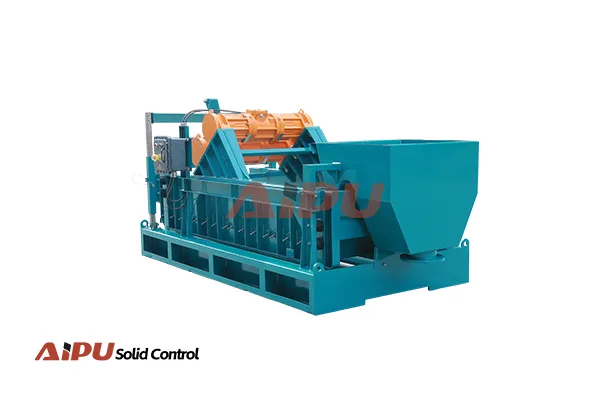
The shaker operates on the principle of vibratory screening. The heart of the device is a vibrating screen deck, typically a mesh or wire cloth panel, mounted on a basket. As the mud returns from the well, it is directed onto the screen surface. An electric or hydraulic motor drives an eccentric weight mechanism, imparting a high-frequency, oscillating motion to the entire screen deck. This vibration is crucial; it causes the fluid mixture to stratify and fluidize. The liquid phase of the mud, along with particles smaller than the screen mesh openings, passes through the screen and is collected in a tank below for further processing or recirculation. The larger drilled solids, which cannot pass through the mesh, are conveyed along the screen surface and discharged off the end of the shaker into a separate collection point.
Key Components and Their Functions
Several components work in unison to achieve effective separation. The screen deck is the filtering medium, available in various mesh sizes to target specific particle sizes. Finer mesh screens remove smaller particles but have lower fluid throughput. The vibrator assembly, often consisting of unbalanced rotating weights, generates the necessary motion. The basket is the structural frame that holds the screen and is subjected to the vibration. Feed and discharge boxes manage the inflow of dirty mud and the outflow of separated solids. The angle or tilt of the basket can often be adjusted to control the residence time of solids on the screen, balancing separation efficiency with processing rate.
Types of Motion and Screen Dynamics
Drilling mud shakers utilize different motion patterns to optimize performance for various mud types and solid loads. Linear motion shakers move the solids in a straight line along the screen, providing good conveyance for sticky solids and high volumes. Elliptical or circular motion shakers impart a rolling action to the solids, which can be effective for drier screening and degassing. Balanced elliptical motion shakers combine elements of both, offering controlled solids transport and good liquid handling. The choice of motion affects how quickly solids are transported off the screen and how thoroughly the liquid is drained from them.

Impact on Drilling Fluid Properties and System Health
Efficient operation of the drilling mud shaker has a direct and profound impact on the entire drilling process. By removing abrasive drilled cuttings, it prevents the rapid wear and tear of downstream pumps, valves, and other solids control equipment. It helps maintain the desired density, viscosity, and chemical composition of the drilling fluid, which is essential for wellbore stability, pressure control, and effective cuttings transport from the bottom of the hole. A poorly performing shaker allows fine solids to build up in the system, increasing mud weight unnecessarily, raising hydraulic friction, and reducing the rate of penetration, ultimately leading to higher operational costs and potential well control issues.
Optimization and Operational Considerations
Optimal shaker performance requires careful selection and maintenance of the screen mesh. The mesh must be fine enough to protect the mud system but not so fine that it causes fluid loss by becoming prematurely blinded with solids. Operators must monitor the condition of the screen for tears or clogging and replace it as needed. The flow rate of the returning mud must be matched to the shaker’s capacity and screen configuration. Running multiple shakers in parallel is common on high-flow operations. Proper tensioning of the screen panel is also vital, as a loose screen will not transmit vibration effectively and will fail quickly, compromising the entire solids removal process.
Purchase Shale Shaker: Aipu Solid Control Shale Shaker
If you are interested in our solid control equipment and systems, you can contact us through info@aipusolidcontrol.com Contact Us
