
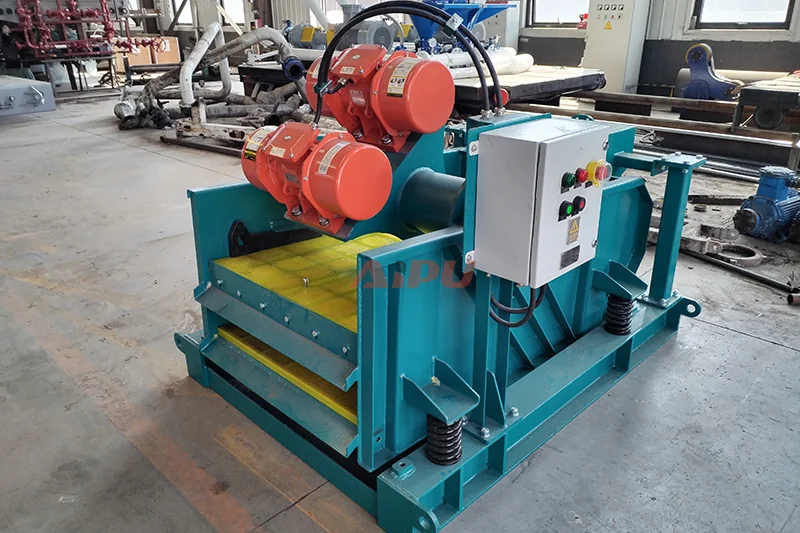
This 2026 buying guide for API certified shale shaker equipment helps drilling contractors and operators navigate the selection process. Aipu Solids Control provides this guidance based on current industry practices and our experience supplying shakers worldwide.


Step 1: Determine Processing Capacity
Calculate maximum mud circulation rate and add 25 to 50 percent margin. Aipu models range from 50 cubic meters per hour (Hunter-Mini) to 420 cubic meters per hour (Hunter-MG4T tandem). Ensure the selected model provides adequate headroom for peak flow periods.
Step 2: Match Vibration Technology
Linear motion for hard formations and water-based mud. Elliptical motion for sticky shales and oil-based mud. Dual-motion (Hunter-MGD) for maximum flexibility across diverse drilling programs. Select based on the formations and mud types your operations typically encounter.
Step 3: Select Screen Configuration
Plan progressive screen strategy: coarser (40-60 mesh) for surface hole, medium (80-120 mesh) for intermediate, fine (150-200 mesh) for production zone. Choose frame material: stainless steel for abrasive durability, composite for corrosion resistance and lighter weight.
Step 4: Verify Manufacturer Credentials
Confirm API Q1 certification through the API Composite List. Check for ISO certifications. Visit the factory or request comprehensive facility documentation. Request customer references from similar operations.
Step 5: Evaluate Total Cost of Ownership
Consider screen consumption rates, maintenance requirements, spare parts availability, and expected service life. Aipu helps customers evaluate complete lifecycle costs, not just purchase price.
Partner with Aipu for certified quality. Contact us at info@aipusolidcontrol.com to discuss your requirements and discover the Aipu difference in API Q1 certified solids control equipment.
If you are interested in our solid control equipment and systems, you can contact us through info@aipusolidcontrol.com Contact Us
