
Understanding the distinct roles of a drilling mud shale shaker and a desander is essential for configuring an effective solids control system. These two equipment types serve complementary functions in the staged separation process, and Aipu Solids Control manufactures both, enabling integrated system solutions with matched performance characteristics.


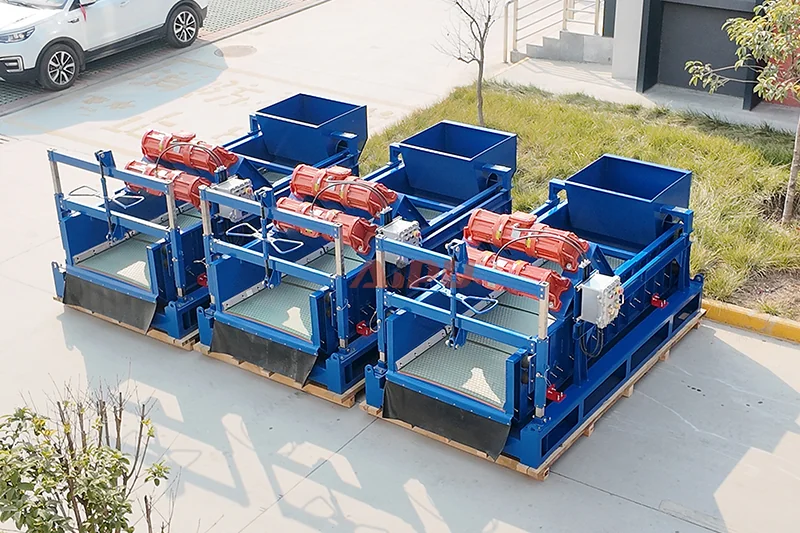
The fundamental difference lies in the separation mechanism and the particle size range each equipment handles. The shale shaker uses mechanical vibration and screen panels to separate particles based on physical size, typically removing solids larger than 74 to 100 microns depending on screen mesh selection. Aipu Hunter series shakers provide this primary separation at the full circulating rate, processing every barrel of returning drilling fluid. The desander, in contrast, uses centrifugal force generated by a hydrocyclone to separate particles based on density and size differences. Desanders typically handle particles in the 40 to 74 micron range, with their processing rate limited by hydrocyclone capacity rather than the full circulating volume. The shaker handles coarse, high-volume solids separation while the desander addresses finer particles in a smaller flow stream.
The equipment relationship is sequential and synergistic. The shaker must perform effectively for the desander to operate properly. If the shaker fails to remove coarse solids, these particles enter the desander where they cause excessive wear on hydrocyclone cones and reduce separation efficiency. Conversely, the desander addresses particles too fine for economic shaker removal—attempting to use screens fine enough to match desander performance would severely limit shaker throughput capacity. Aipu designs its shakers and desanders as complementary equipment within its complete solids control product line, ensuring proper sizing and interface compatibility. The 6.0G to 7.5G operation of Aipu shakers with premium Ital-Vibras, Martin, and Oli motors provides the effective primary separation that allows downstream desanders to perform their designed function.
Selection between a shale shaker and desander is not an either-or decision but rather a system design question. Every drilling fluid circulation system requires at least one shaker for primary separation. Desanders are added when finer separation is required than practical shaker screens can provide or when shaker capacity at fine mesh sizes would be insufficient. Aipu’s engineering team helps customers configure the complete solids control system—shakers, desanders, desilters, and centrifuges in proper sequence—with each component sized appropriately for the total flow rate and the expected particle loading. Manufactured in Aipu’s 50,000 square meter Xi’an facility under API Q1 certified quality management, both shakers and desanders benefit from the same certified quality systems and 15-plus years of manufacturing experience.
Partner with Aipu for certified quality. Contact us at info@aipusolidcontrol.com to discuss your requirements and discover the Aipu difference in API Q1 certified solids control equipment.
If you are interested in our solid control equipment and systems, you can contact us through info@aipusolidcontrol.com Contact Us
