
The API number assigned to drilling mud shale shaker screens provides a standardized reference for comparing separation performance and selecting the right screens for specific drilling applications. Aipu Solids Control provides this comprehensive guide to screen API numbers, explaining what the numbers mean, how they are determined, and how to use them for effective screen selection across changing drilling conditions.


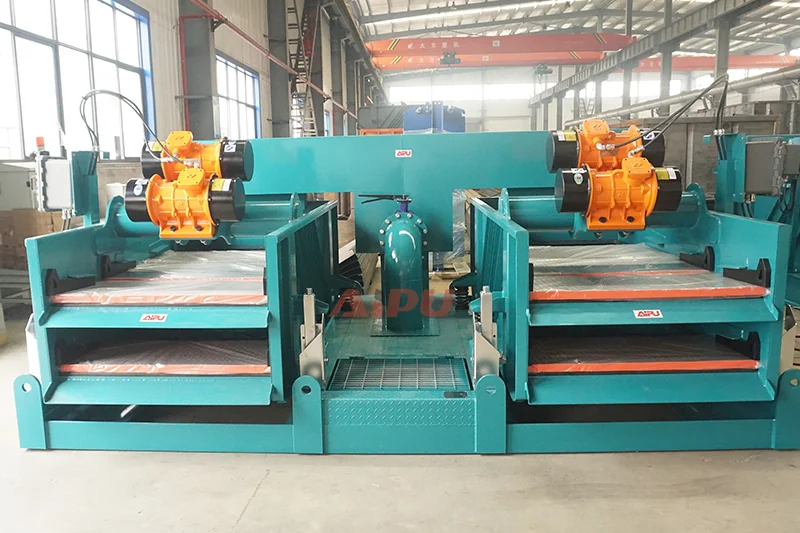
API RP 13C is the governing recommended practice for screen designation, replacing the previous API RP 13E standard. Under API RP 13C, screens are tested using a standardized procedure that measures the cut point—the particle size at which the screen retains a specified percentage of particles—and the screen conductance, which indicates fluid-handling capacity. The API number is derived from the cut point test results and provides a consistent reference that is independent of screen manufacturer, mesh type, or manufacturing method. Aipu screens are tested according to API RP 13C procedures, and the resulting API numbers enable direct comparison between Aipu screens and those from other manufacturers meeting the same standard.
The API number scale typically ranges from API 20 to API 400, though for practical drilling applications, the range from API 40 to API 200 covers most screening requirements. Higher API numbers indicate finer screens with smaller cut points. API 40 screens, used for surface hole sections and high-volume applications, allow relatively large particles to pass. API 70 to API 100 screens provide intermediate separation suitable for many intermediate drilling sections. API 120 to API 170 screens deliver the finer separation needed as drilling approaches production zones. API 200 screens represent the fine end of normal shaker applications, providing maximum solids removal for formation protection and fluid quality.
Screen conductance data from API RP 13C testing is equally important as cut point for practical screen selection. Two screens with the same API number can have different conductance values, indicating different fluid-handling capacity. Higher conductance screens can process more fluid flow, which may be critical for high-rate drilling applications. Aipu provides both cut point and conductance data for our complete screen range, supporting informed selection that balances separation quality with throughput requirements. Screen selection strategy should consider the progressive nature of cuttings generation during drilling—coarser screens for surface hole where cuttings are large and volume is high, progressing to finer screens as hole size decreases and cuttings become smaller. Aipu quick-change screen system enables this progressive strategy with minimal downtime between screen changes. All Aipu screens are manufactured and tested in our API Q1 certified 50,000 square meter Xi’an facility.
Partner with Aipu for certified quality. Contact us at info@aipusolidcontrol.com to discuss your requirements and discover the Aipu difference in API Q1 certified solids control equipment.
If you are interested in our solid control equipment and systems, you can contact us through info@aipusolidcontrol.com Contact Us
