
When drilling fluid returns from the wellbore, the first equipment it meets is the shale shaker. If the shaker fails to remove cuttings efficiently, every downstream solids control device — desanders, desilters, centrifuges — runs harder and costs more. That is why high G force linear motion shale shakers have become standard for modern oil drilling, both onshore and offshore.
What “High G Force” Means
G force is the vibration intensity applied to the screen surface. A standard shale shaker typically operates between 3.0 and 5.0 G. A high G force shaker delivers 6.0 G or more.
Higher G force does two things:
-
It moves solids across the screen faster, increasing throughput.
-
It lifts fluid off the cuttings more aggressively, producing drier solids.
For oil drilling, drier solids mean less fluid loss, lower disposal costs, and better performance from downstream equipment such as vertical cuttings dryers or decanter centrifuges.
Why Linear Motion
Unlike balanced elliptical or circular motion shakers, a linear motion shale shaker generates a straight-line vibration. That straight-line action throws cuttings forward in a consistent trajectory with no sideways drift.
Field benefits include:
-
Predictable solids conveyance – operators can adjust deck angle to control residence time.
-
Less screen wear – particles move straight instead of bouncing into screen edges.
-
Higher capacity per screen panel – linear motion handles higher flow rates for a given screen area.
These advantages make linear motion the preferred choice for high-flow, high-solids drilling environments, including deep oil and gas wells.
Where High G Force Linear Motion Shakers Are Used
These shakers add the most value in:
-
Oil-based mud (OBM) applications – maximizing fluid recovery directly impacts well cost.
-
High rate of penetration (ROP) drilling – large volumes of cuttings return quickly.
-
Offshore platforms – limited space and strict discharge regulations demand high-efficiency separation.
-
Remote land rigs – reducing waste volume lowers logistics and disposal expenses.
Key Technical Parameters to Evaluate
When selecting a high G force linear motion shale shaker for an oil drilling project, focus on:
-
G force range – look for 6.0–7.0 G for most oil drilling conditions.
-
Screen area – larger area (for example, 2.7 m² to 5.4 m² per unit) allows finer screens without sacrificing flow.
-
Deck angle adjustability – on‑the‑fly adjustment from –1° to +5° lets operators optimize for changing mud weights and flow rates.
-
Dual motion capability – some shakers allow switching between linear and balanced elliptical motion during operation, adapting to real‑time drilling conditions.
-
Power and motor configuration – dual exciter motors with ratings between 1.5 kW and 2.0 kW each are typical for high G force designs.
Real‑World Performance Example
A typical high G force linear motion shaker rated at 140 m³/h capacity with 2.7 m² of screen area can:
-
Process full returns from a mid‑size oil rig without bypass.
-
Achieve a cut point down to 75 microns with the right screen mesh.
-
Keep solids discharge dry enough to be handled directly by a screw conveyor or cuttings box.
In oil‑based mud systems, this level of performance can reduce base oil loss by 3–5% per circulation, which translates directly into savings.
Maintenance Considerations
High G force does increase stress on components. Look for:
-
Exciter motors with sealed bearings – rated for continuous operation at 6+ G.
-
Screen deck support – a rigid frame with rubber damping strips to prevent panel damage.
-
Quick‑release tensioning – allows screen changes in under five minutes.
Regular checks should include bolt torques on exciter mounts, screen wear patterns, and the condition of spring mounts. A well‑maintained high G force linear motion shaker will run thousands of hours with minimal downtime.

Summary
Choosing a high G force linear motion shale shaker for oil drilling is not about buying the most expensive unit. It is about matching vibration intensity and motion type to your specific mud system, flow rates, and solids load. High G linear motion delivers faster throughput, drier cuttings, and lower operating costs. For drilling engineers and solids control specialists, this is one upgrade that pays for itself in reduced fluid waste and fewer hours on downstream equipment.
Why Operators Choose Aipu Solid Control
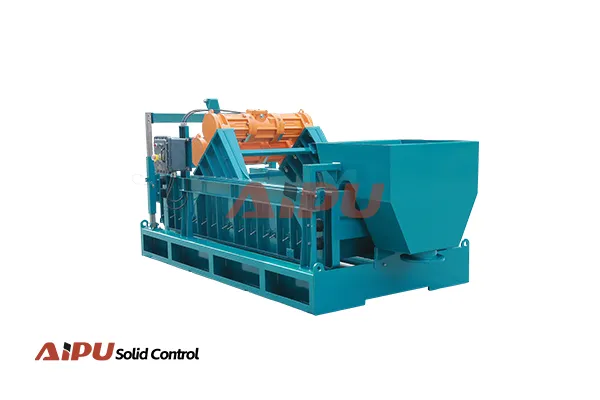
Aipu Solid Control has been manufacturing solids control equipment for over 20 years. The Hunter series linear motion shakers are built with dual exciter motors delivering 6.0–7.0 G, adjustable deck angle from –1° to +5°, and screen areas up to 8.1 m² on a single unit. Every shaker is API compliant and can be customized for ATEX zones, different motor brands, or composite frame screens.
Aipu Solid Control does not simply deliver a box and walk away. The team helps customers match vibration mode, screen mesh, and flow capacity to their exact mud system — water based, oil based, or synthetic. Whether a single shaker, a dual tandem setup, or a complete solids control package is needed, Aipu Solid Control has delivered systems that already run in over 30 countries.
Ask Aipu Solid Control for a quote or a site recommendation. Provide flow rate, mud weight, and solids load. They will send a configuration that works.
If you are interested in our solid control equipment and systems, you can contact us through info@aipusolidcontrol.com Contact Us
