
Overview of Mud Cleaner Function
For drilling engineers and rig operators, a common question is: how does a mud cleaner work?
A mud cleaner functions as a secondary and tertiary solids removal device, positioned after shale shakers and before centrifuges in the drilling fluid circulation system.
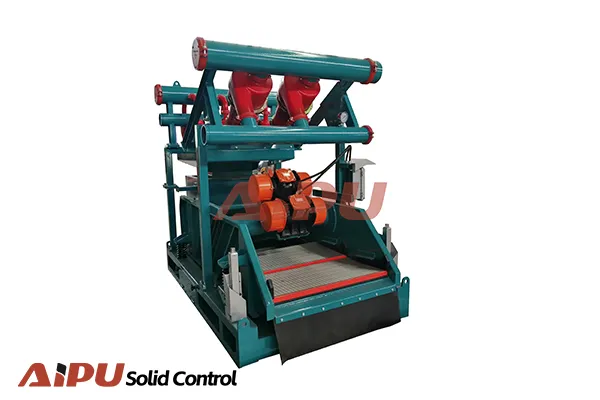

How Does a Mud Cleaner Work: Process Perspective
Stage 1: Pressurized Feeding
Drilling fluid is delivered to the mud cleaner under controlled pressure, ensuring stable cyclone performance.
Stage 2: Cyclonic Separation Mechanism
Using centrifugal force, hydrocyclones separate solids by particle size and density without moving parts, resulting in:
- High separation efficiency
- Low maintenance requirements
Stage 3: Shaker-Assisted Recovery
The cyclone underflow is processed by fine shale shaker screens, allowing:
- Maximum drilling fluid recovery
- Reduced waste volume
How Does a Mud Cleaner Improve Drilling Efficiency?
- Maintains low solids concentration
- Prevents bit wear and formation damage
- Improves rate of penetration (ROP)
- Extends lifespan of downstream equipment
Operational Factors That Influence How a Mud Cleaner Works
- Inlet pressure stability
- Screen mesh selection
- Drilling fluid viscosity
- Solids loading conditions
Proper operation ensures the mud cleaner performs at peak efficiency throughout drilling operations.
AIPU Mud Cleaner: Engineered for Real Drilling Conditions
AIPU Solid Control mud cleaners are engineered with:
Wear-resistant polyurethane hydrocyclones
High-G vibration shale shakers
Flexible configuration for different flow rates
Our systems are trusted by drilling contractors worldwide for both land rigs and offshore platforms.
📌 Discover AIPU mud cleaner solutions:
https://www.aipusolidcontrol.com/products/mud-cleaner.html
If you are interested in our solid control equipment and systems, you can contact us through info@aipusolidcontrol.com Contact Us
