
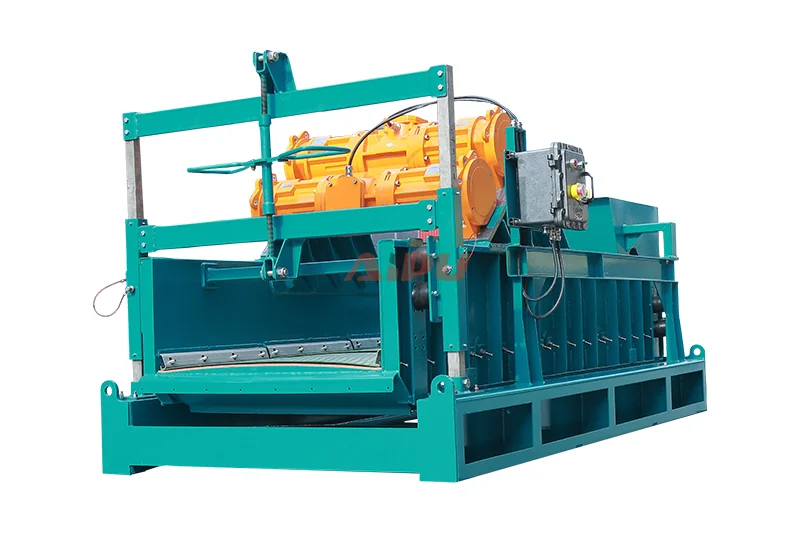
Linear motion shale shaker equipment from Aipu Solids Control handles both water-based mud and oil-based mud effectively, though the optimization strategies differ between these fundamentally different drilling fluid systems.


Water-Based Mud: Maximizing Throughput and Dewatering
Water-based mud, with its lower viscosity and surface tension, drains readily through screen openings. Aipu linear shakers exploit this characteristic with high-G linear motion at 6.0G to 7.5G that provides aggressive solids conveyance and efficient dewatering. For WBM applications, operators typically run steeper deck angles toward the plus 5 degree end of the adjustment range to maximize throughput, and use finer screen meshes—API 100 to API 200 in production zones—that would blind quickly with heavier, more viscous fluids. The combination of high G-force, steep deck angle, and fine screens enables Aipu shakers to process high WBM circulation rates while maintaining excellent separation quality.
Oil-Based Mud: Managing Viscosity and Sticking
Oil-based mud presents different challenges. Higher viscosity at the screen surface slows fluid passage, and the sticky nature of OBM-coated cuttings can cause screen blinding and solids accumulation. For OBM applications, Aipu recommends shallower deck angles to increase retention time and allow complete fluid drainage. Slightly coarser screens—API 60 to API 140—balance throughput with separation. The high G-force of Aipu linear shakers remains beneficial, as the increased acceleration helps overcome the viscous resistance that can cause cuttings to stick to screen surfaces. For operations predominantly using OBM, Aipu dual-motion Hunter-MGD shakers operating in elliptical mode often provide optimal performance, combining the gentle lifting action that prevents blinding with adequate conveyance velocity.
Screen Selection Strategy by Mud Type
Screen selection differs significantly by mud type. WBM permits finer screens due to lower viscosity and better fluid passage. OBM typically requires slightly coarser screens to maintain throughput, though the excellent cuttings encapsulation of OBM means that slightly coarser separation does not necessarily compromise hole quality. Aipu quick-change screen system makes it practical to maintain different screen specifications for WBM and OBM applications on the same rig, switching as the mud system changes between hole sections. Stainless steel frames are preferred for abrasive WBM applications, while composite frames offer reduced sticking advantages with OBM.
Partner with Aipu for certified quality. Contact us at info@aipusolidcontrol.com to discuss your requirements and discover the Aipu difference in API Q1 certified solids control equipment.
If you are interested in our solid control equipment and systems, you can contact us through info@aipusolidcontrol.com Contact Us
