
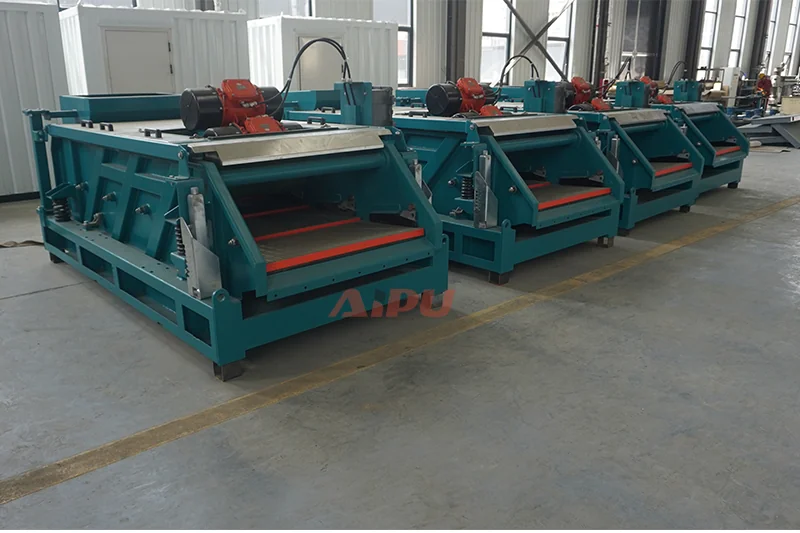
Oil-based mud presents specific challenges for shale shaker operation that require appropriate equipment configuration and operational practices. Aipu Solids Control engineers its shakers to handle oil-based mud effectively, with features that address the unique properties of these drilling fluids.


Understanding Oil-Based Mud Challenges
Oil-based mud differs from water-based mud in several ways that affect shaker performance. Its higher viscosity tends to cling to cuttings, making dewatering more difficult. The oily nature causes more severe screen blinding as fine solids stick to screen wires rather than passing through or moving along. The elevated temperature at which many oil-based systems operate accelerates wear on seals, coatings, and some screen materials. Additionally, oil-based mud is significantly more expensive than water-based systems, making fluid recovery economically critical. Every barrel of oil-based mud saved through effective shaker operation represents significant cost savings.
Recommended Shaker Configuration
Aipu recommends elliptical motion shakers for oil-based mud applications. The Hunter-MGD dual-motion shaker is particularly well-suited because it can operate in elliptical mode, where the combination of linear motion with a slight circular component produces a gentle rolling action that helps lift sticky cuttings off the screen surface. This elliptical motion reduces screen blinding compared to pure linear vibration. Composite frame screens often perform better with oil-based mud because the synthetic material has less affinity for oil than stainless steel frames, reducing sticking. Slightly coarser mesh than would be used with equivalent water-based mud helps maintain throughput when dealing with stickier cuttings.
Operational Best Practices
Run the shaker at the higher end of its G-force range—7.0G to 7.5G on Aipu Hunter shakers—to maximize separation energy. Maintain slightly steeper deck angles, typically around 3 to 5 degrees, to increase cuttings velocity and reduce residence time during which blinding can develop. Clean screens more frequently when running oil-based mud, using high-pressure washers with appropriate cleaning solutions. Monitor fluid temperature and adjust shaker parameters as mud properties change with temperature during the circulation cycle. Aipu corrosion-resistant coatings protect shaker frames and components from the aggressive chemical environment of oil-based systems. The financial return from improved fluid recovery with properly configured Aipu equipment typically justifies the attention to these operational details.
Partner with Aipu for certified quality. Contact us at info@aipusolidcontrol.com to discuss your requirements and discover the Aipu difference in API Q1 certified solids control equipment.
If you are interested in our solid control equipment and systems, you can contact us through info@aipusolidcontrol.com Contact Us
