
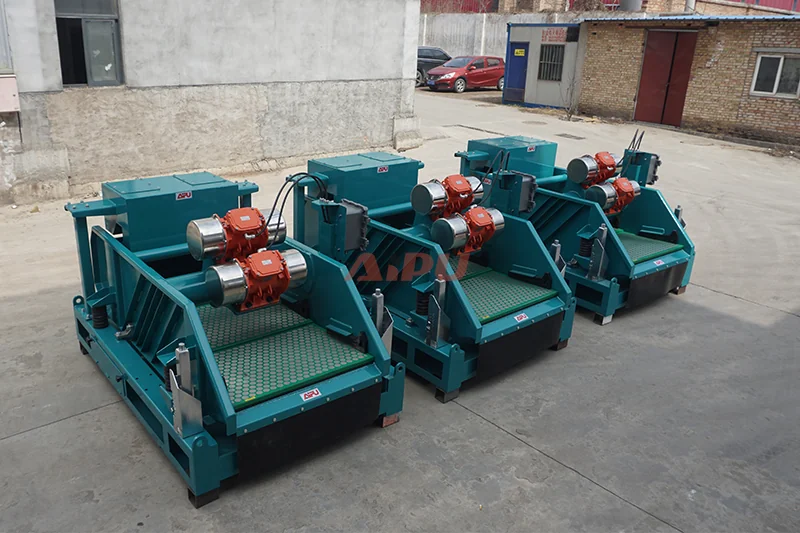
Adjusting the deck angle of a linear motion shale shaker is a practical operational control that significantly affects separation performance, cuttings dryness, and processing capacity. Aipu Hunter series shakers feature tool-free deck angle adjustment for quick optimization.


Why Deck Angle Matters
Deck angle determines how long cuttings remain on the screen surface and how quickly they move toward discharge. Steeper angles increase the downhill component of vibration, accelerating cuttings conveyance and increasing processing capacity at the expense of retention time and dewatering effectiveness. Shallower angles, including negative angles with the deck tilted uphill, increase retention time for better dewatering but reduce throughput capacity. Finding the optimal balance between these competing factors for current drilling conditions is the purpose of deck angle adjustment.
Aipu Adjustment Mechanism and Range
Aipu linear shakers provide deck angle adjustment from minus 1 degree to plus 5 degrees on most Hunter series models. The adjustment mechanism is designed for tool-free operation, typically using a hand-operated jack screw or ratchet mechanism accessible from the operating platform. Graduated markings on the adjustment mechanism allow operators to return to previously successful settings. The mechanism is robustly constructed to withstand the vibration environment and incorporates locking features to prevent angle drift during operation. This practical design enables operators to make adjustments quickly based on changing conditions without stopping the shaker or requiring specialized tools.
Optimizing Deck Angle for Different Conditions
For high-flow applications with water-based mud and hard formation cuttings, steep angles of plus 3 to plus 5 degrees maximize throughput by rapidly conveying solids off the screen. For sticky formations in oil-based mud where dewatering is the priority, shallow to negative angles of minus 1 to plus 1 degree extend retention time for maximum fluid recovery. For typical intermediate drilling with balanced priorities, moderate angles of plus 1 to plus 3 degrees provide the best compromise. Observe cuttings discharge for signs of suboptimal angle: wet, sloppy cuttings indicate too steep an angle with insufficient retention time; mud pooling on the deck indicates too shallow an angle or insufficient capacity.
Combined Adjustment with Screen Selection
Deck angle adjustment works in combination with screen mesh selection. When switching to finer screens, slightly steeper deck angles may be needed to maintain throughput. When switching to coarser screens, shallower angles may be beneficial for improved dewatering. Aipu quick-change screens and tool-free angle adjustment make this combined optimization practical for drilling crews, allowing rapid response to changing conditions.
Partner with Aipu for certified quality. Contact us at info@aipusolidcontrol.com to discuss your requirements and discover the Aipu difference in API Q1 certified solids control equipment.
If you are interested in our solid control equipment and systems, you can contact us through info@aipusolidcontrol.com Contact Us
