
Optimizing the performance of an API certified shale shaker involves fine-tuning operational parameters to match current drilling conditions. Aipu Solids Control provides the tools and guidance needed to get maximum value from API Q1 certified equipment.
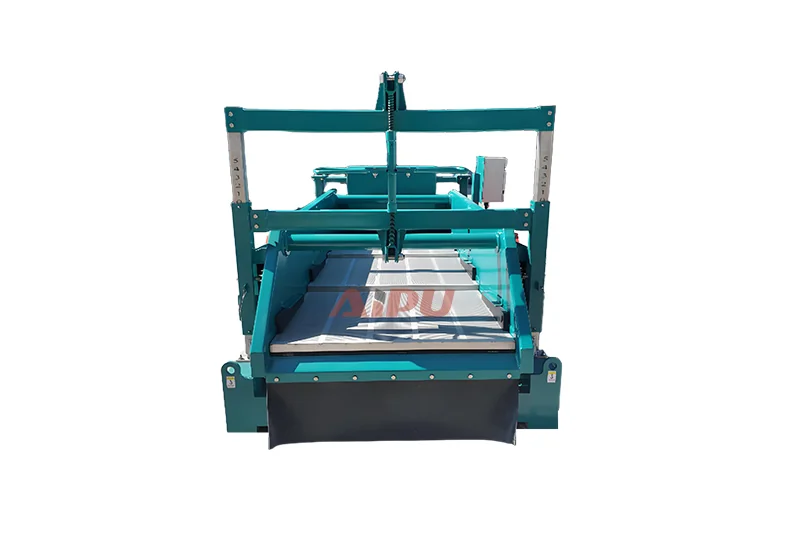

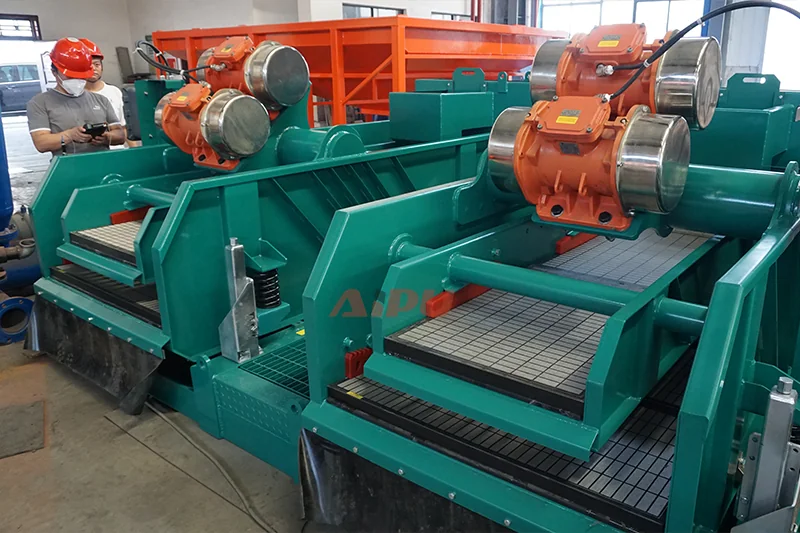
Match Screen Specifications to Current Drilling Phase
Screen mesh selection is the most powerful optimization lever available to operators. As drilling progresses through different formations, the optimal screen specification changes. Start with coarser screens in the surface hole where cuttings are large and throughput is the priority. Progressively move to finer screens in intermediate and production sections where smaller particles must be removed. Aipu recommends keeping multiple screen sets on hand and changing screens as conditions warrant. The quick-change screen design on Aipu shakers makes this practical to perform as part of routine operations rather than a major maintenance activity.
Fine-Tune Deck Angle for Current Mud Properties
The deck angle adjustment on Aipu shakers is not a set-and-forget setting. As mud viscosity, density, and solids loading change throughout the well, the optimal deck angle shifts. Monitor cuttings dryness at the discharge end and fluid throughput across the deck. If cuttings are too wet, increase the angle to provide more dewatering time. If throughput is restricted and mud is pooling on the deck, reduce the angle to accelerate drainage. The tool-free angle adjustment on Aipu shakers allows this optimization to be performed quickly by rig personnel.
Monitor and Control Feed Rate
Operating a shale shaker at or above its rated capacity compromises separation quality and increases mud loss. If flow rates are approaching the shaker capacity limit, consider reducing drilling rate temporarily or redistributing flow across multiple shakers if available. For operations that consistently push the capacity limit, upgrading to a larger model or adding a second shaker provides the reserve capacity needed for optimal performance. Aipu offers upgrade paths from single shakers to tandem configurations that preserve the investment in existing equipment.
Maintain Balanced Vibration
Vibration balance directly affects separation efficiency and screen life. Periodically measure vibration amplitude and frequency at multiple points on the screen deck and compare to the baseline values recorded during factory acceptance testing. Deviations from baseline indicate motor wear, mounting issues, or structural problems that should be investigated. Aipu provides vibration measurement guidance and baseline data in the equipment documentation, making this optimization accessible to rig personnel.
Optimize for Specific Mud Types
Different drilling fluids respond differently to vibration. Water-based mud generally drains quickly and benefits from linear motion with higher G-force. Oil-based mud, being more viscous, drains more slowly and may benefit from elliptical motion with slightly lower G-force to provide longer retention time. For operations switching between mud types, the Aipu Hunter-MGD dual-motion shaker allows the vibration mode to be changed to match the fluid, providing optimal performance with either mud type.
Maximize your solids control performance. Contact Aipu at info@aipusolidcontrol.com for expert advice on optimizing your shale shaker configuration for your specific drilling conditions.
If you are interested in our solid control equipment and systems, you can contact us through info@aipusolidcontrol.com Contact Us
