
Maintaining stable drilling fluid properties is absolutely critical for efficient and safe drilling operations. A mud cleaner plays an indispensable role in achieving this stability by combining the principles of a desander and a desilter with a fine-screen shaker. This powerful combination allows for the removal of drilled solids across a wide range of particle sizes, specifically those between 15 and 150 microns, which are often too fine for shale shakers yet too coarse for centrifuges. By efficiently extracting these harmful solids, the mud cleaner directly contributes to a stable mud weight, optimal rheology, and reduced overall drilling fluid costs. The result is enhanced drilling performance, better wellbore stability, and a significant reduction in the risk of downhole complications such as stuck pipe or lost circulation.
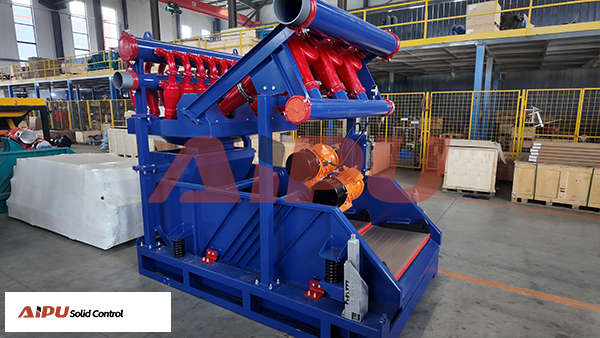

How a Mud Cleaner Works
The operational principle of a mud cleaner is elegantly straightforward yet highly effective. The process begins when the weighted drilling fluid, laden with drilled solids, is pumped into the hydrocyclone assembly. This assembly consists of multiple small-diameter cones. Inside these cones, centrifugal force spins the fluid, forcing the heavier, abrasive solids to the outer wall and down to the bottom discharge. The cleaned, lighter fluid then moves upward and exits through the vortex finder. This discharged fluid, along with the finer particles, is then deposited onto a very fine-mesh vibrating screen. This screen performs the final critical separation, allowing the valuable liquid and barite to pass through and return to the active mud system, while the discarded solids are conveyed off the screen.
Key Benefits for Drilling Fluid Management
Integrating a mud cleaner into your solids control system delivers substantial, tangible benefits. The most significant advantage is the dramatic reduction in drilled solids content. This leads directly to a more stable and consistent mud weight, eliminating problematic fluctuations. Furthermore, by removing abrasive particles, the mud cleaner protects downstream equipment like pumps, liners, and drill bits from excessive wear, thereby extending their service life and reducing maintenance costs. The system also promotes lower consumption of expensive chemical additives and barite, as the fluid is continuously purified and reused. This comprehensive conditioning results in a cleaner, more efficient drilling operation from spud to total depth.
Optimal Placement in the Solids Control Cascade
To function at peak efficiency, the mud cleaner must be correctly positioned within the overall solids control equipment lineup. It is always placed after the shale shakers and degasser but before the centrifuges. The shale shakers remove the largest cuttings, and the degasser eliminates hazardous entrained gases. The mud cleaner then takes the underflow from these units to target the medium-sized solids. Finally, the centrifuge polishes the fluid by removing the ultra-fine particles. This sequential processing ensures that each piece of equipment operates within its most effective range, preventing overload and maximizing the lifespan and performance of the entire system.
For operators seeking reliable and high-performance mud cleaning solutions, Aipu stands as a trusted manufacturer of solid control equipment. Aipu’s mud cleaners are engineered for robust performance, high separation efficiency, and ease of maintenance, making them an excellent choice for demanding drilling environments where stable fluid conditioning is non-negotiable.
If you are interested in our solid control equipment and systems, you can contact us through info@aipusolidcontrol.com Contact Us
