
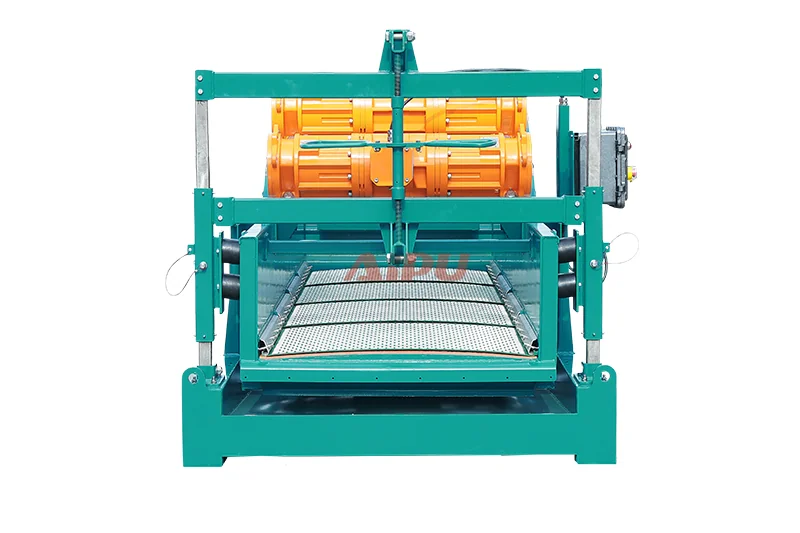
Shale shaker equipment is the primary solids removal device in drilling operations, processing all circulating fluid to maintain drilling mud properties throughout the well construction process. Shale shaker equipment from Aipu Solids Control provides the capacity, reliability, and adaptability that modern drilling operations require.


Role in the Drilling Process
During drilling operations, the shale shaker operates continuously from the moment circulation begins until the well reaches total depth. It receives the full return flow from the wellbore annulus, typically 100 to 400 cubic meters per hour depending on hole size, pump capacity, and drilling phase. The shaker must handle this flow while removing solids ranging from coarse gravel-sized cuttings in the surface hole to fine sand and silt in deeper sections. Throughout the well, the shaker’s effectiveness directly affects drilling fluid properties, rate of penetration, equipment wear, and overall drilling costs. Aipu Hunter series shakers are sized to match specific rig requirements, from the 50 cubic meter per hour Hunter-Mini for small rigs to the 420 cubic meter per hour Hunter-MG4T tandem for large deep drilling operations.
Adapting to Changing Drilling Conditions
Drilling conditions change continuously throughout a well. Formations vary from soft clays to hard abrasive sandstones. Mud weight increases with depth. Cuttings size and shape change with formation type and bit design. The shale shaker must adapt to these changes through adjustable parameters. Aipu provides this adaptability through adjustable deck angles, variable G-force settings, quick-change screens that allow mesh changes in minutes, and in the Hunter-MGD model, switchable vibration motion. This adaptability keeps the shaker optimized for each hole section rather than being a compromise that works adequately at best in some sections and poorly in others.
Integration with Solids Control System
The shale shaker does not operate in isolation. It is the first stage in a multi-stage solids control system typically including desanders, desilters, and centrifuges downstream. The shaker removes the coarsest and largest-volume solids. How well it performs this function determines the loading on downstream equipment. Effective shaker operation extends desander and desilter cone life, reduces centrifuge maintenance, and protects mud pumps from abrasive wear. Aipu engineers consider this system integration when designing shakers, ensuring that the equipment’s capacity, cut point capability, and reliability contribute positively to overall solids control system performance.
Partner with Aipu for certified quality. Contact us at info@aipusolidcontrol.com to discuss your requirements and discover the Aipu difference in API Q1 certified solids control equipment.
If you are interested in our solid control equipment and systems, you can contact us through info@aipusolidcontrol.com Contact Us
