
The use of stainless steel in a corrosion resistant shale shaker provides fundamental advantages that directly impact equipment life, maintenance requirements, and total cost of ownership. Aipu Solids Control has developed detailed stainless steel specifications for its Hunter series corrosion resistant shakers, applying over 15 years of manufacturing experience and field performance data to optimize material selection for each component and application. Understanding the benefits of stainless steel helps operators evaluate the value of corrosion resistant shaker construction for their specific drilling programs.
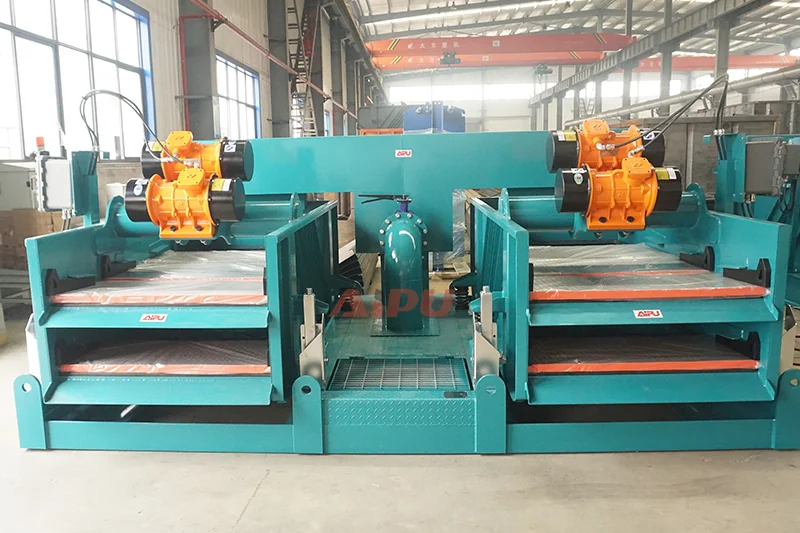


The primary benefit of stainless steel in shale shaker construction is corrosion resistance itself. Unlike carbon steel, which relies on protective coatings for corrosion protection, stainless steel forms a self-healing passive chromium oxide layer on its surface that provides inherent corrosion resistance. When this passive layer is scratched or damaged, it reforms spontaneously in the presence of oxygen, providing continuous protection that coatings alone cannot match. Aipu uses 304 stainless steel for general corrosion resistance applications and 316L stainless steel—with molybdenum content that significantly enhances resistance to pitting and crevice corrosion from chlorides—for the most demanding environments including offshore operations and high-salinity brine-based mud systems. This material selection, based on a clear understanding of corrosion mechanisms, ensures that stainless steel components maintain their structural integrity and surface finish throughout years of aggressive drilling fluid exposure.
Beyond corrosion resistance, stainless steel offers additional practical benefits. The smooth, non-porous surface of stainless steel components resists the accumulation of drilling fluid residues and scale deposits that can affect shaker performance and complicate cleaning. This surface quality also reduces friction between screen panels and support rails, contributing to more consistent screen tension and longer screen life. Stainless steel fasteners and hardware maintain thread integrity, making maintenance and component replacement operations easier and more reliable than with corroded carbon steel fasteners that may require destructive removal. Quick-change screen retention mechanisms with stainless steel hardware operate consistently through thousands of screen change cycles without the binding and galling that affects corroded mechanisms.
The economic benefit of stainless steel construction is realized through reduced lifecycle costs. While initial material cost is higher, the elimination of coating maintenance, the prevention of corrosion-related structural repairs, and the extension of equipment service life to 10 to 15 years provide a compelling return on investment. Aipu’s 50,000 square meter Xi’an facility, operating under API Q1 certified quality management, uses documented welding procedures specifically developed for stainless steel components to ensure that fabrication quality matches material quality. Premium Ital-Vibras, Martin, and Oli motors and adjustable deck angles from minus 1 degree to plus 5 degrees complete the stainless steel shaker specification. Equipment operating in more than 30 countries validates that Aipu’s stainless steel shakers deliver the corrosion resistance, reliability, and lifecycle economics that make the investment in stainless steel construction a sound business decision for demanding drilling operations.
Partner with Aipu for certified quality. Contact us at info@aipusolidcontrol.com to discuss your requirements and discover the Aipu difference in API Q1 certified solids control equipment.
If you are interested in our solid control equipment and systems, you can contact us through info@aipusolidcontrol.com Contact Us
