
Screen replacement is the most frequent maintenance activity on any shale shaker, and dual deck configurations introduce additional considerations that affect both the frequency and procedure of screen changes. Aipu Solids Control has designed its dual deck shakers with quick-change screen systems that minimize the downtime and labor required for this essential maintenance task, while this guide provides practical information for optimizing screen replacement on Aipu dual deck equipment.


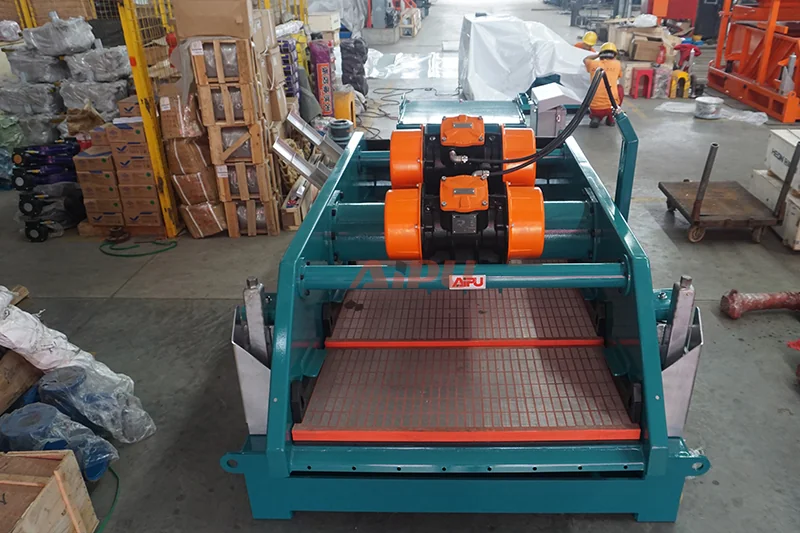
Understanding screen wear patterns is the first step in optimizing replacement schedules. On Aipu dual deck shakers, the upper deck screens typically experience more aggressive wear because they receive the full flow of returning drilling fluid with unabated solids loading. Coarser cuttings impact upper deck screens with greater force, and the initial surge of fluid as it spreads across the feed area concentrates wear at the feed end. Lower deck screens receive fluid that has already passed through the upper deck, so the cuttings load is finer and less abrasive. However, lower deck screens operate with finer mesh specifications that are inherently more fragile and susceptible to blinding. Aipu recommends monitoring both deck levels independently, with upper deck screens typically requiring more frequent replacement due to physical wear and lower deck screens requiring replacement when blinding reduces throughput below acceptable levels.
The Aipu quick-change screen retention system enables complete upper deck screen replacement in approximately five minutes and lower deck replacement in similar time. The system uses a tensioning mechanism that secures screens firmly against precision-machined support rails, eliminating the hammer-and-wedge systems that can damage screens during installation and create uneven tension that promotes premature wear. Lighter composite frame screens reduce the physical effort required for screen handling, particularly important when changing lower deck screens that may be in less accessible positions. Aipu recommends keeping a complete set of replacement screens for each deck level stocked on the rig, along with the specific mesh sizes appropriate for current and anticipated drilling conditions.
Screen inspection should be performed at regular intervals during operation. Operators should check for torn or damaged areas that allow cuttings to bypass separation, loose screens that rattle against support rails causing additional wear, and blinded areas where fine particles have packed into screen openings reducing effective area. Damaged screens should be replaced immediately to prevent cascading damage to other screens and to maintain separation quality. Manufactured in Aipu’s 50,000 square meter Xi’an facility under API Q1 certified quality management, Aipu replacement screens carry API RP 13C certification with documented cut point and conductance data for consistent, predictable separation performance.
Partner with Aipu for certified quality. Contact us at info@aipusolidcontrol.com to discuss your requirements and discover the Aipu difference in API Q1 certified solids control equipment.
If you are interested in our solid control equipment and systems, you can contact us through info@aipusolidcontrol.com Contact Us
