
Adjusting a drilling shale shaker for maximum performance requires understanding the relationship between operating parameters and separation results. Aipu Solids Control provides field-proven adjustment guidance to help operators optimize their shakers for current drilling conditions.

Deck Angle Adjustment
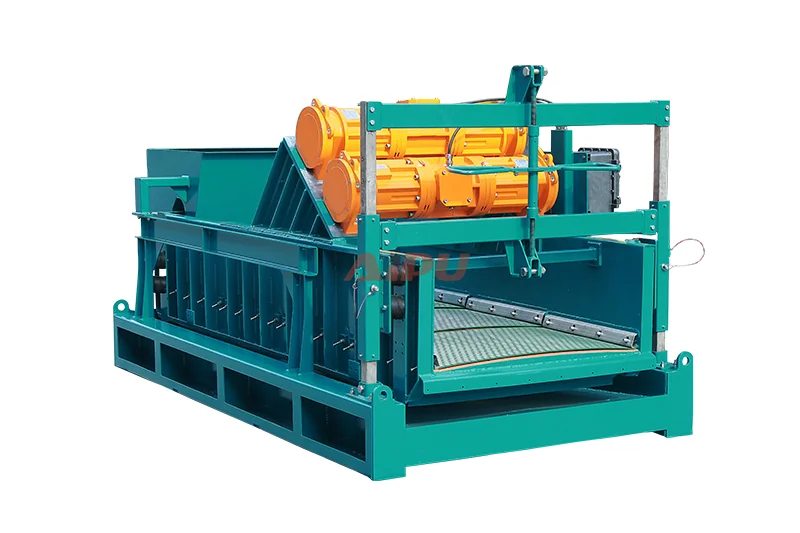
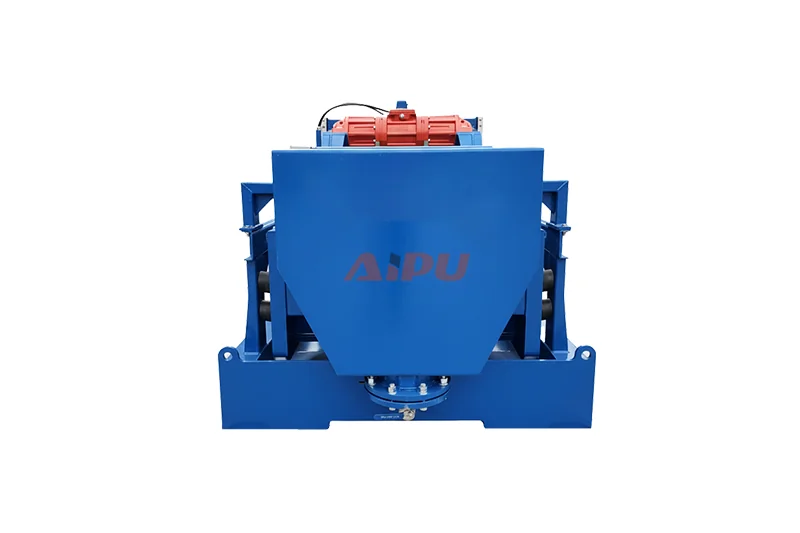
Deck angle is the most frequently adjusted parameter and has the most immediate effect on performance. Start with the manufacturer’s recommended setting and observe results. If cuttings are wet or mud is pooling on the screen surface, decrease the deck angle (flatter) to increase fluid drainage time. If solids are accumulating and threatening to flow backward, increase the deck angle (steeper) to accelerate discharge. Aipu shakers offer tool-free adjustment from minus 1 degree to plus 5 degrees, enabling operators to optimize continuously without stopping operations.
G-Force Optimization
Higher G-force improves separation aggressiveness and conveyance speed but increases screen wear. For high-viscosity muds, heavy solids loading, or high ROP operations, operate at the upper end of the G-force range (7.0G to 7.5G). For normal operations with manageable solids loading, the mid-range (6.0G to 6.5G) provides good performance with acceptable screen life. Aipu shakers allow G-force adjustment through motor weight configuration, enabling operators to match force level to conditions.
Motion Type Selection
On Aipu Hunter-MGD dual-motion shakers, select linear motion for hard formations producing granular cuttings with water-based mud. Linear motion provides aggressive forward conveyance and efficient drainage for low-viscosity fluids. Select elliptical motion for sticky shales or oil-based mud where the “tumbling” action prevents clay accumulation on screens and improves fluid passage through the screen cloth. Switching between motion types takes only minutes and requires no equipment changes.
Screen Mesh Optimization
Screen mesh selection involves balancing separation quality against throughput. Start with the finest mesh that provides adequate capacity for the circulation rate. If mud loss or pooling occurs, move one step coarser. If screen life is acceptable and no mud loss occurs, consider moving one step finer for improved solids removal. Progressive strategy—coarser upper sections, finer lower sections—optimizes both capacity and separation quality throughout the well.
Performance Monitoring Indicators
Monitor cuttings dryness as an indicator of drainage effectiveness. Observe the cuttings discharge pattern—even distribution across the screen width indicates proper flow distribution. Check for mud loss off the discharge end—any fluid in the cuttings pile means screens are too fine, deck angle is too steep, or flow rate exceeds capacity. Listen for changes in shaker sound—new noise patterns often indicate developing issues that require attention.
Partner with Aipu for certified quality. Contact us at info@aipusolidcontrol.com to discuss your requirements and discover the Aipu difference in API Q1 certified solids control equipment.
If you are interested in our solid control equipment and systems, you can contact us through info@aipusolidcontrol.com Contact Us
