
Selecting the right drilling shale shaker requires systematic evaluation of drilling program requirements, operational conditions, and equipment specifications. Aipu Solids Control provides this comprehensive selection guide to assist drilling contractors and operators.


Step 1: Calculate Required Processing Capacity
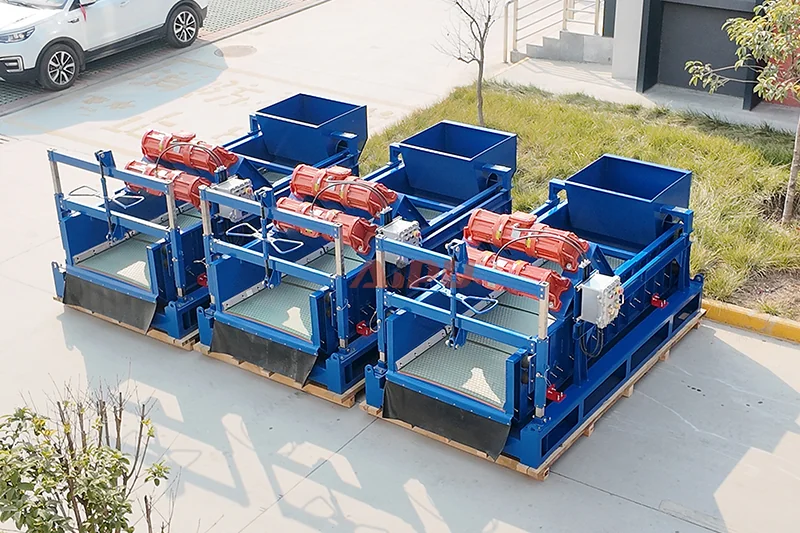
Determine the maximum mud circulation rate for the drilling program and add 25 to 50 percent margin for surge flows and future operations. Aipu shaker capacity ratings represent verified field performance, not theoretical maximums. The Hunter-Mini at 50 cubic meters per hour suits workover and small rigs. The Hunter-MG3 at 140 cubic meters per hour handles medium rigs. The Hunter-MG4 at 180 and MG5 at 220 cubic meters per hour serve large land rigs. Tandem configurations provide up to 420 cubic meters per hour for the highest-capacity applications.
Step 2: Match Vibration Technology to Formations
Consider the formations and mud types in the drilling program. Linear motion (standard on most Aipu models) provides excellent performance in hard formations with water-based mud. Elliptical motion (available on Hunter-MGD) handles sticky shales and oil-based mud more effectively. For diverse drilling programs encountering varied formations, the dual-motion capability of the Hunter-MGD provides the flexibility to optimize for changing conditions.
Step 3: Evaluate Screen Requirements
Plan the progressive screen strategy from surface hole to total depth. Ensure that screen specifications for each section are available and economically priced. Consider frame material—stainless steel for abrasive durability, composite for corrosion resistance. Confirm that replacement screens can be sourced reliably and promptly.
Step 4: Consider Environmental and Regulatory Requirements
Offshore operations require explosion proof certification (ATEX/IECEx). Remote locations demand maximum reliability and spare parts availability. Environmental regulations may dictate minimum separation performance or cuttings dryness. Aipu configures shakers for specific environmental and regulatory requirements.
Step 5: Evaluate Total Cost of Ownership
Purchase price is only one component of total cost. Screen consumption rates, motor and bearing replacement intervals, maintenance labor requirements, and expected service life all affect long-term costs. Aipu provides comprehensive cost analysis support to help customers evaluate complete lifecycle economics.
Partner with Aipu for certified quality. Contact us at info@aipusolidcontrol.com to discuss your requirements and discover the Aipu difference in API Q1 certified solids control equipment.
If you are interested in our solid control equipment and systems, you can contact us through info@aipusolidcontrol.com Contact Us
