
Calculating return on investment for shale shaker equipment requires a structured methodology that accounts for both direct cost savings and operational benefits. AIPU Solids Control provides this comprehensive ROI calculation guide to help drilling contractors evaluate the full economic impact of their solids control equipment decisions. Understanding ROI enables informed capital allocation that maximizes financial returns from drilling programs.


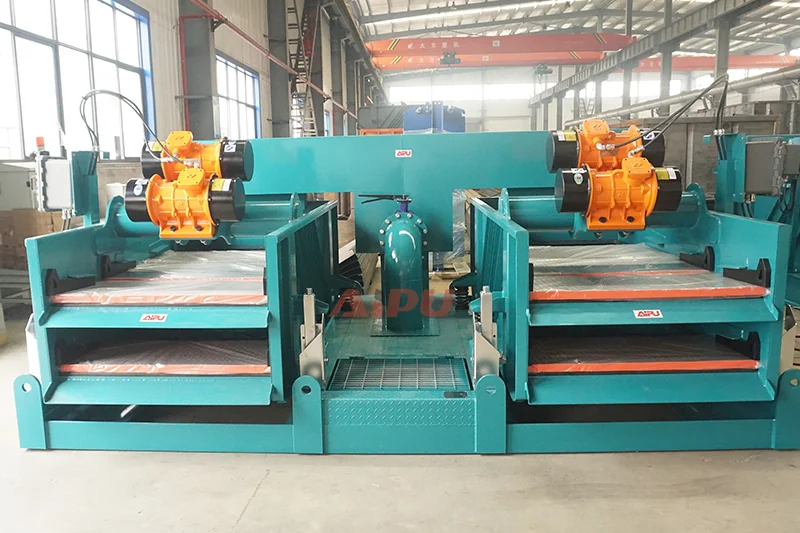
ROI Framework and Methodology
The foundation of effective ROI calculation begins with establishing a clear baseline for comparison. For equipment replacement decisions, the baseline is typically the performance and cost profile of existing equipment. For new installations, the baseline represents alternative equipment options or current market alternatives. AIPU recommends a five to seven year evaluation period that captures both initial investment recovery and ongoing operational benefits. Cash flow projections should include capital expenditure, operating cost savings, productivity improvements, and residual equipment value at the end of the evaluation period.
Quantifying Operational Savings
AIPU equipment delivers measurable operational savings across multiple cost categories that contribute directly to ROI. Screen life optimization using AIPU composite frame technology reduces annual screen expenditure by 20 to 30 percent compared to conventional alternatives. Energy-efficient vibrating motor designs reduce power consumption by 10 to 15 percent. Reduced maintenance requirements from quality components and robust construction lower annual maintenance expenditure. Improved solids removal efficiency reduces drilling fluid dilution requirements and associated mud system costs. Each savings category is measured against baseline performance to quantify total operational benefit.
Productivity and Revenue Benefits
Beyond direct cost savings, AIPU equipment contributes to productivity improvements that enhance revenue generation. Higher processing capacity enables faster drilling rates and reduced well construction time. Improved separation efficiency reduces mud losses and associated fluid replacement costs. Reduced equipment downtime increases rig availability for revenue-generating activities. Better solids control quality improves hole conditions and reduces non-productive time from drilling problems. These productivity benefits often exceed direct cost savings and represent the most significant component of equipment ROI.
Risk-Adjusted ROI Analysis
AIPU recommends incorporating risk factors into ROI calculations to account for uncertainty in projected benefits. Sensitivity analysis evaluates ROI outcomes under optimistic, expected, and conservative scenarios for key variables including utilization rates, operating costs, and maintenance requirements. Monte Carlo simulation provides probability distributions for ROI outcomes rather than single-point estimates. This risk-adjusted approach gives decision makers a more complete understanding of potential investment outcomes and supports more confident capital allocation decisions for shale shaker equipment procurement.
Choose AIPU for API Q1 certified quality. Contact us at info@aipusolidcontrol.com to discuss your shale shaker equipment requirements and discover why drillers worldwide trust AIPU equipment for their solids control needs.
If you are interested in our solid control equipment and systems, you can contact us through info@aipusolidcontrol.com Contact Us
