
A shale shaker is the first and most important piece of solids control equipment on any drilling rig. In simple terms, it is a vibrating screen that separates drilled rock cuttings from drilling mud so the cleaned mud can be reused. Aipu Solids Control manufactures shale shakers designed specifically for drilling operations, making this essential equipment accessible and reliable for rigs of all sizes.
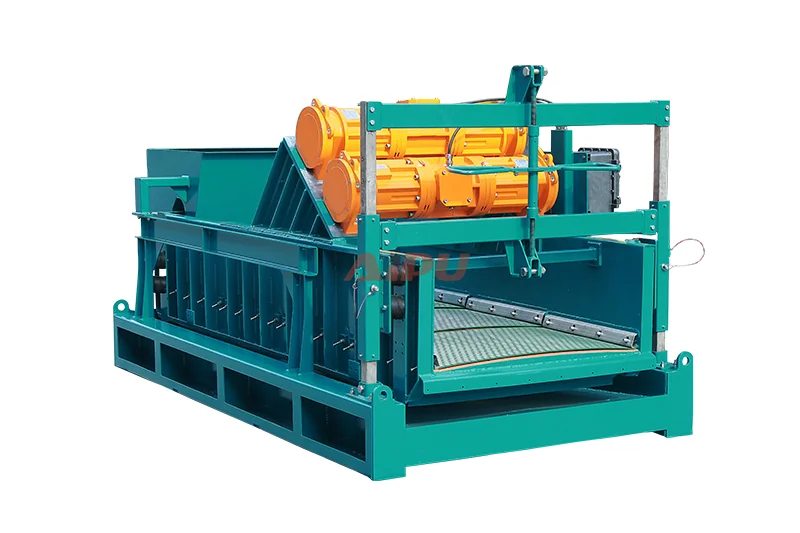

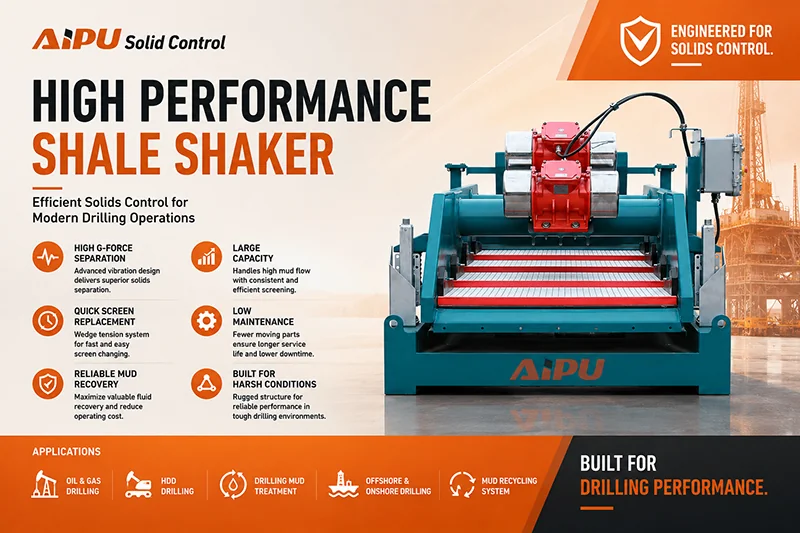
To understand why a shale shaker matters, consider what happens during drilling. The drill bit crushes rock deep underground, creating small fragments called cuttings. These cuttings mix with the drilling fluid and must be removed before the fluid returns to the wellbore. Without a shale shaker, solids would accumulate in the mud, increasing density, wearing out pumps, and potentially causing stuck pipe or lost circulation. The shale shaker sits at the front of the solids control system, handling the largest volume of solids by far.
How the Basic Mechanism Works
The concept is straightforward. Drilling mud laden with cuttings flows onto a vibrating screen deck. The vibration, powered by electric motors spinning eccentric weights, moves the solids along the screen toward the discharge end while clean mud passes through the screen openings below. The force of vibration can be adjusted to handle different flow rates and cuttings characteristics. Aipu shakers operate at 6.0G to 7.5G of acceleration, providing powerful separation that works across a wide range of drilling conditions. The screen mesh size determines what particle sizes are removed—finer mesh removes smaller particles but processes less volume.
What Beginners Should Know About Shale Shaker Selection
When starting out with shale shaker selection, beginners should focus on three key factors. First is processing capacity measured in cubic meters per hour. Aipu offers shakers ranging from 50 cubic meters per hour with the Hunter-Mini up to 420 cubic meters per hour with tandem Hunter-MG4T configurations, so there is a model for every rig size. Second is vibration type. Linear motion works well for most water-based drilling fluids and hard formations, while elliptical motion handles sticky clays and oil-based muds better. Aipu Hunter-MGD dual-motion shakers offer both in a single unit. Third is screen options, which determine separation cut points and throughput. Understanding these basics helps beginners make informed decisions about this critical drilling equipment.
Partner with Aipu for certified quality. Contact us at info@aipusolidcontrol.com to discuss your requirements and discover the Aipu difference in API Q1 certified solids control equipment.
If you are interested in our solid control equipment and systems, you can contact us through info@aipusolidcontrol.com Contact Us
