
Multiple interconnected factors influence how effectively a shale shaker performs in real-world drilling conditions. Understanding these variables helps operators optimize their solids control strategy and get the best results from Aipu equipment.


Vibration Characteristics: G-Force and Frequency
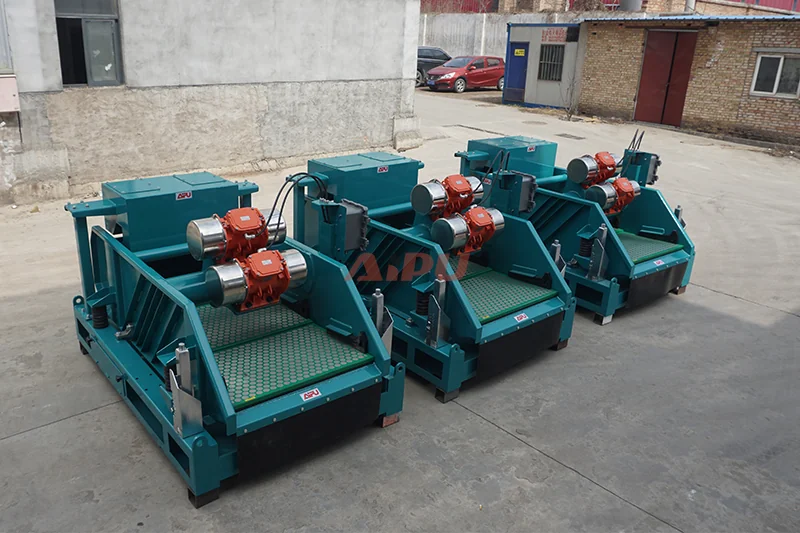
The vibration system is the single most important factor affecting shale shaker performance. G-force, the measure of acceleration applied to the screen deck, directly determines how aggressively solids are separated from the drilling fluid. Higher G-force produces drier cuttings and better separation but also increases screen wear and structural stress. Aipu shakers operate at an optimized range of 6.0G to 7.5G, providing excellent separation without excessive screen consumption. Vibration frequency, typically 15 to 25 Hz in Aipu designs, affects how quickly cuttings move across the screen and how well fine particles are released from the mesh. The combination of G-force and frequency is carefully engineered for each Aipu model to balance separation quality with equipment longevity.
Screen Specifications: Mesh Size, Area, and Condition
Screen panels directly determine separation quality. Mesh size sets the particle size cut-off, with finer meshes removing smaller particles but reducing throughput. Screen area influences capacity, with larger areas handling higher flow rates. Screen condition is equally critical because even small tears allow oversized solids to pass, while blinded screens reduce effective area and cause mud loss. Aipu uses API-certified screens with consistent, accurate mesh openings and offers both stainless steel and composite frame options for different applications.
Drilling Fluid Properties
The physical properties of the drilling mud significantly impact shaker performance. High viscosity slows fluid passage through screens, reducing throughput. High gel strengths make it harder to release cuttings from the mesh surface. Elevated density increases the hydrostatic head on the screen, affecting drainage rates. Temperature affects viscosity and can change how screens interact with the fluid. Aipu shakers are designed to handle a wide range of mud properties, but operators should control these variables within recommended ranges for optimal results.
Flow Rate and Solids Loading
Every shale shaker has a maximum processing capacity. Exceeding this capacity causes mud to flow over the back of the screen, returning cuttings to the active system. Within the rated capacity, higher flow rates generally mean reduced cuttings retention time and potentially wetter discharge. Higher solids loading from faster drilling increases the mass of material the shaker must process, which can challenge separation efficiency if the shaker is operating near its capacity limit.
Deck Angle Adjustment
The angle of the screen deck relative to horizontal is a powerful operational control that Aipu makes easily adjustable. Steeper angles increase cuttings conveyance speed and produce drier solids but reduce fluid throughput. Flatter angles increase throughput but may result in wetter cuttings discharge. The optimal angle depends on flow rate, solids loading, mud properties, and the specific formation being drilled.
Operational Consistency and Maintenance
Even the best shale shaker cannot perform optimally if poorly maintained. Loose screen panels allow solids bypass. Worn support rails create uneven screen tension. Degraded springs or mounts alter vibration patterns. Imbalanced motors reduce separation efficiency and accelerate structural wear. Aipu provides comprehensive maintenance documentation and remote support to help operators keep their equipment in peak operating condition.
Partner with Aipu for superior solids control. Contact us at info@aipusolidcontrol.com to discuss your shale shaker needs and receive a tailored solution for your drilling operation.
If you are interested in our solid control equipment and systems, you can contact us through info@aipusolidcontrol.com Contact Us
