
Understanding how a drilling shale shaker works helps operators optimize performance and troubleshoot issues effectively. Aipu Solids Control designs shakers based on sound engineering principles validated through extensive field application.

Vibration Generation
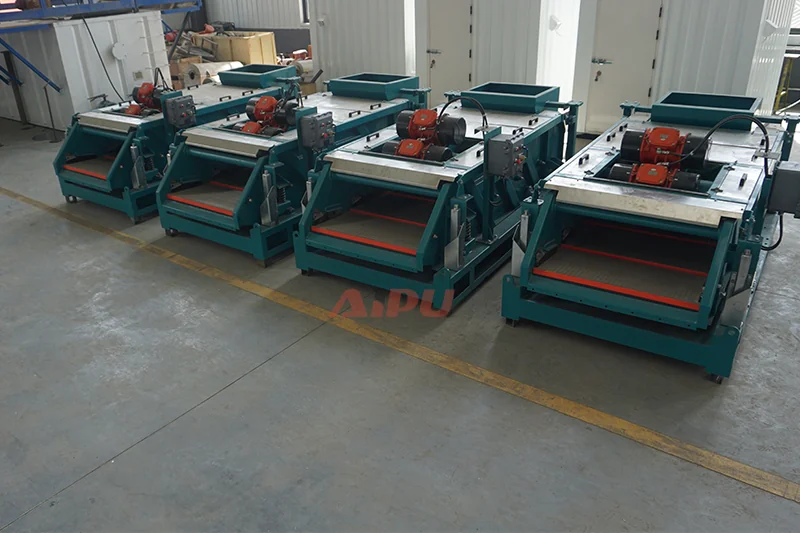
The operating principle begins with vibration generation. Aipu shakers use paired vibration motors mounted on the shaker basket. These motors rotate eccentric weights, creating centrifugal force that vibrates the entire basket assembly. When two motors rotate in opposite directions, the horizontal force components cancel while vertical components combine, producing linear motion. Adjusting the phase angle between motors changes the motion pattern from linear to elliptical. Aipu Hunter-MGD dual-motion shaker allows operators to switch between these motion types without equipment changes.
Solids Separation Process
Drilling fluid returning from the wellbore is directed onto the vibrating screen surface through a flow distributor. The vibration produces several effects simultaneously. It fluidizes the solids-laden mud, allowing clean fluid to drain through the screen openings. It conveys retained solids toward the discharge end by “throwing” them forward with each vibration cycle. It prevents screen blinding by keeping particles in motion rather than lodging in screen openings. The combination of these effects produces continuous separation—clean mud below, discharged cuttings above.
Key Operating Parameters
Three primary parameters determine shaker performance. G-force, the acceleration experienced by material on the screen, affects both separation aggressiveness and solids conveyance speed—Aipu shakers operate at 6.0G to 7.5G. Deck angle controls retention time on the screen—steeper angles speed solids discharge but reduce fluid drainage time, while flatter angles increase fluid recovery but may cause mud loss if flow rates are high. Screen mesh size determines the largest particle that can pass through—finer mesh improves separation but reduces capacity.
Flow Path Through the Shaker
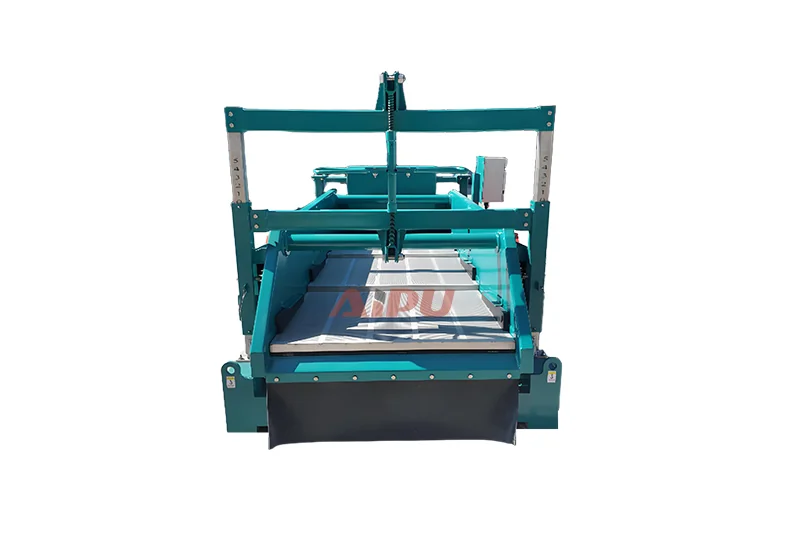
Mud enters the shaker through the possum belly or flow distributor at the feed end, spreads across the screen width, and flows toward the discharge end as vibration conveys solids forward. Clean fluid passing through the screens collects in the sump below and flows to the next processing stage. Retained solids travel the length of the screen deck and discharge at the far end for collection and disposal. This continuous process operates as long as drilling fluid is circulating.
Partner with Aipu for certified quality. Contact us at info@aipusolidcontrol.com to discuss your requirements and discover the Aipu difference in API Q1 certified solids control equipment.
If you are interested in our solid control equipment and systems, you can contact us through info@aipusolidcontrol.com Contact Us
