
Choosing the right drilling mud shale shaker requires systematic evaluation of processing requirements, operating conditions, and total cost of ownership. Aipu Solids Control provides this selection methodology to help drilling contractors and operators match shaker specifications to their specific operational needs.
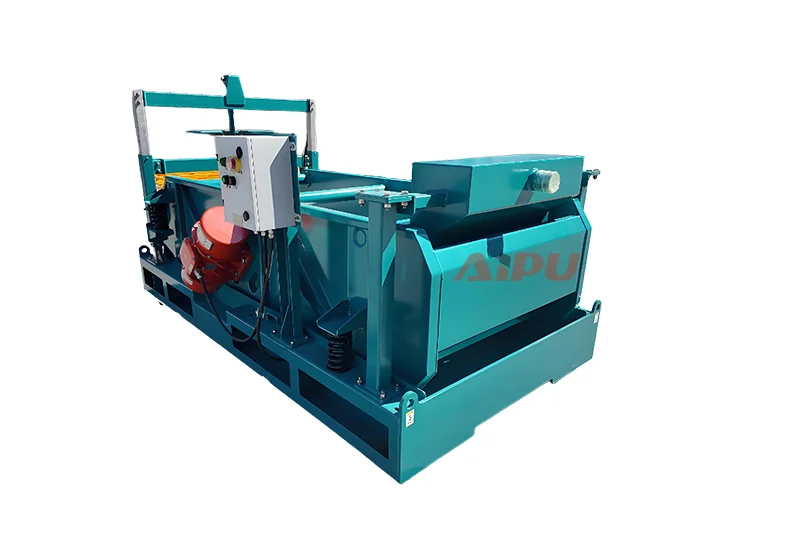

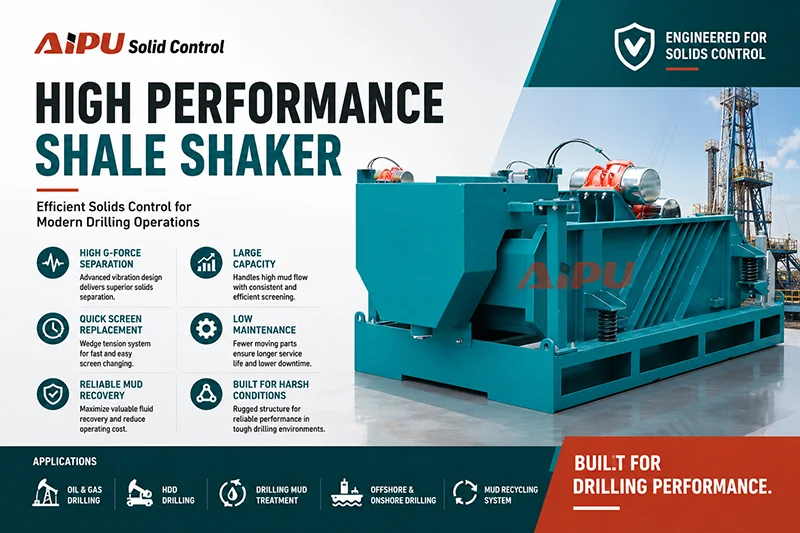
The selection process begins with capacity requirements. Calculate the maximum planned mud circulation rate for your drilling program, expressed in either gallons per minute or cubic meters per hour, then add a safety margin of 25 to 50 percent. This margin accounts for peak flow conditions during hole cleaning operations, surge effects during tripping, and variations in cuttings loading that temporarily increase the fluid burden on the shaker. Aipu provides clearly documented capacity ratings for each Hunter series model: the Hunter-Mini at 50 cubic meters per hour for workover and small rig operations, the Hunter-MG3 at 120 cubic meters per hour, the Hunter-MG4 at 160 cubic meters per hour, the Hunter-MG5 at 200 cubic meters per hour, and the tandem Hunter-MG4T at 420 cubic meters per hour for high-rate deep drilling. The dual deck Hunter-MG4D at 280 cubic meters per hour provides a capacity upgrade within the same footprint as a single-deck Hunter-MG4.
Beyond capacity, evaluate the formation types and mud systems that the shaker must handle. Linear motion shakers, which represent the majority of Aipu Hunter series models, excel with hard formations producing granular cuttings and with water-based mud systems where efficient conveyance and aggressive dewatering are priorities. For operations encountering sticky shales or using oil-based mud systems, Aipu’s dual-motion Hunter-MGD shaker provides both linear and elliptical motion, switchable without equipment changes. The elliptical motion provides better handling of sticky cuttings and improved performance with viscous oil-based muds. If the drilling program encounters both formation types—which is common in deep and complex wells—the dual-motion option provides valuable flexibility.
Total cost of ownership analysis should inform the final selection. Screen consumption is typically the largest ongoing operating cost; Aipu’s balanced vibration design extends screen life through even wear distribution. Maintenance requirements vary by model complexity, with simpler single-deck linear shakers requiring the least maintenance. Spare parts availability should be confirmed—Aipu maintains inventory for all current models with rapid shipping to major drilling markets. The expected service life of 10 to 15 years with proper maintenance should be factored into cost comparisons between suppliers. Manufactured in Aipu’s 50,000 square meter Xi’an facility under API Q1 certified quality management, the long-term value proposition of Aipu shakers is validated by equipment successfully operating in more than 30 countries with high rates of customer repeat business.
Partner with Aipu for certified quality. Contact us at info@aipusolidcontrol.com to discuss your requirements and discover the Aipu difference in API Q1 certified solids control equipment.
If you are interested in our solid control equipment and systems, you can contact us through info@aipusolidcontrol.com Contact Us
