
Both the shale shaker and the mud cleaner are essential solids control equipment, but they serve distinctly different roles in the drilling fluid cleaning process. Understanding these differences helps operators configure their solids control system for maximum efficiency.


Fundamental Role in the Solids Control Train
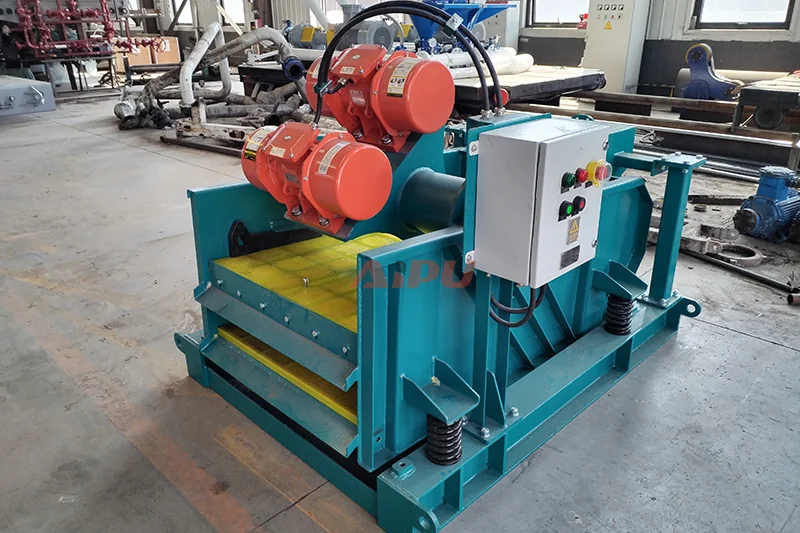
The shale shaker is the first-stage solids removal device, positioned at the very beginning of the solids control system where drilling fluid first returns from the wellbore. Its job is to remove the largest and most abundant drill cuttings, typically particles larger than 74 microns. The mud cleaner, by contrast, is positioned downstream after the desander and desilter, combining a fine-mesh shaker screen with hydrocyclones to remove fine solids in the 15 to 74 micron range. Think of the shale shaker as the coarse filter and the mud cleaner as the fine filter in a multi-stage filtration system.
How They Work: Different Mechanisms
A shale shaker operates purely through mechanical vibration and screening. Drilling fluid flows onto a vibrating screen deck, and the vibration moves solids across the screen while clean mud passes through the mesh. No additional energy input beyond the vibrating motors is required. A mud cleaner adds hydrocyclone technology to the process. The drilling fluid first enters desanding or desilting cones, where centrifugal force concentrates fine solids into a small underflow stream. This concentrated solids stream then passes over a fine-mesh vibrating screen for final separation, while the cleaner overflow returns directly to the active mud system.
Solids Size Range and Separation Precision
The shale shaker targets coarse solids, typically from 74 microns up to several millimeters in size. Using API screen sizes from 40 to 200 mesh, it removes the bulk of drilled cuttings that would otherwise rapidly accumulate in the mud system. The mud cleaner focuses on fine and ultra-fine solids, typically between 15 and 74 microns. These particles are too small to be economically removed by shale shaker screens alone but are large enough to cause significant mud property degradation if allowed to accumulate. The mud cleaner fills the gap between what the shale shaker leaves behind and what the centrifuge handles.
When to Use Each Equipment Type
Every drilling operation should have a shale shaker as the minimum solids control equipment. There is no drilling scenario where removing coarse solids at the flowline is optional. Mud cleaners become necessary when drilling conditions demand fine solids control. This includes horizontal and directional wells where low-solids mud is critical for drilling performance, operations using expensive oil-based or synthetic-based mud where maximum fluid recovery is an economic priority, and wells in formations where fine solids can cause formation damage. Aipu manufactures both shale shakers and mud cleaners, allowing operators to build a complete, integrated solids control system from a single reliable supplier.
Integration in a Complete System
The shale shaker and mud cleaner work best as complementary components of an integrated solids control strategy. The shale shaker removes the heavy solids load that would otherwise overload the hydrocyclones in the mud cleaner. The mud cleaner then removes the fine solids that passed through the shaker screens but would still degrade mud properties if left in the system. Aipu designs its equipment to integrate seamlessly, with compatible flow capacities, common spare parts where practical, and coordinated control systems that simplify operation and maintenance.
Partner with Aipu for superior solids control. Contact us at info@aipusolidcontrol.com to discuss your shale shaker needs and receive a tailored solution for your drilling operation.
If you are interested in our solid control equipment and systems, you can contact us through info@aipusolidcontrol.com Contact Us
