
The working principle of a shale shaker is based on mechanical solid-liquid separation through vibration and screening. While the concept is straightforward, the engineering behind a modern Aipu shale shaker involves sophisticated optimization of multiple interacting variables to achieve maximum separation efficiency.


Step-by-Step Operating Sequence
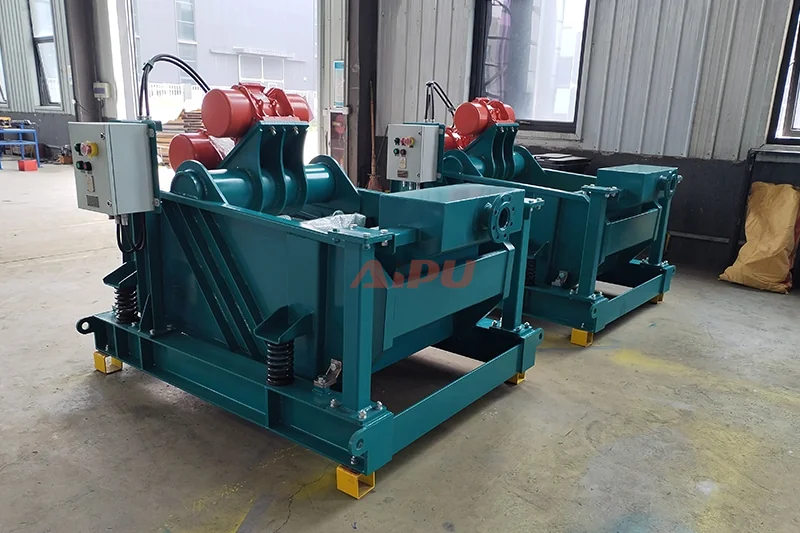
The separation process begins when drilling fluid laden with drill cuttings flows from the wellbore through the flowline and onto the shale shaker. A distribution box or weir spreads the mud evenly across the full width of the screen deck, ensuring uniform loading. As the mud flows onto the vibrating screen surface, the vibration motion simultaneously performs two functions: it accelerates the drainage of clean drilling fluid through the screen mesh openings, and it conveys the separated solids forward toward the discharge end of the deck. The clean drilling fluid, now free of the larger cuttings, falls through the screens into a collection sump below and flows by gravity to the next stage of the solids control system. The dewatered cuttings continue their journey to the end of the screen deck, where they fall off into a collection area for disposal or further processing.
The Role of Vibration in the Separation Process
Vibration is what makes a shale shaker effective. Without vibration, drilling mud would drain through screens at a rate far too slow to handle the flow rates typical of modern drilling operations—often 100 cubic meters per hour or more. The vibration, generated by industrial vibrating motors and transmitted through the screen basket, imparts rapid acceleration to the fluid and solids mixture on the deck. This acceleration repeatedly breaks the surface tension bonds between fluid and solids, allowing the fluid to drain rapidly through the mesh. At the same time, the directional component of the vibration force pushes the solids mass forward along the deck. Aipu shakers operate at 6.0G to 7.5G of acceleration, a range determined through extensive testing to provide optimal separation without excessive screen wear.
Screen Mesh: The Separating Medium
The screen panels are the actual separating medium that determines which particles pass through with the fluid and which are retained as solids. Aipu screens are manufactured to API specifications with precise, consistent mesh openings. Mesh size is expressed as the number of openings per linear inch, with higher numbers indicating finer screens. A 100-mesh screen has 100 openings per inch in each direction, resulting in 10,000 openings per square inch. The mesh size is selected based on the size of solids that must be removed and the desired throughput rate. Multiple screen panels are mounted on the deck in series, and solids become progressively drier as they move across successive panels toward the discharge end.
Key Variables Affecting Separation Performance
Several operational variables affect how well the working principle translates into actual separation performance. Screen mesh size directly determines the cut point between solids and fluid. Deck angle controls conveyance speed and fluid retention time. Vibration intensity governs how aggressively the solids are separated and conveyed. Flow rate and solids loading determine whether the shaker operates within its designed capacity or becomes overloaded. Aipu provides operators with the controls and documentation needed to optimize these variables for their specific drilling conditions, ensuring the working principle is applied to maximum effect.
Ready to improve your solids control? Contact Aipu at info@aipusolidcontrol.com for expert guidance on selecting and configuring the right shale shaker for your drilling program.
If you are interested in our solid control equipment and systems, you can contact us through info@aipusolidcontrol.com Contact Us
