
Comparing a dual deck shale shaker against a single deck shale shaker reveals the technical and operational trade-offs that guide equipment selection. While both types serve the same fundamental purpose of removing drilled solids from drilling fluid, the dual deck design offers distinct advantages in separation efficiency, space utilization, and system simplification. Aipu Solids Control manufactures both single deck and dual deck shakers, providing objective guidance based on application requirements rather than pushing a single solution.

Technical Comparison
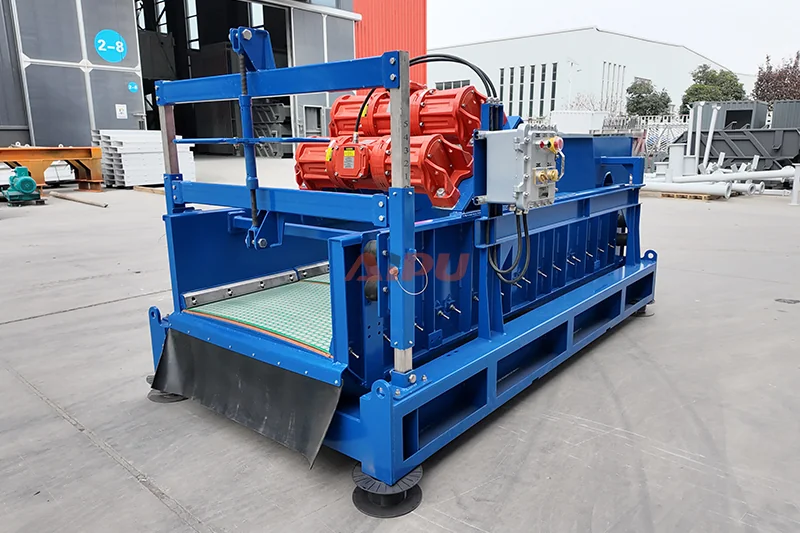
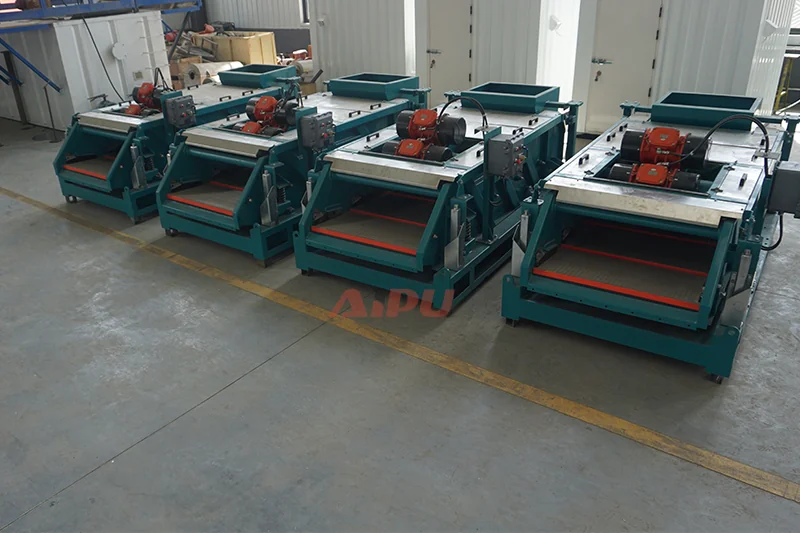
The Aipu Hunter-MG5 single deck shaker provides 3.8 square meters of screen area and 180 cubic meters per hour capacity, while the Hunter-MG4D dual deck shaker delivers 5.4 square meters and 280 cubic meters per hour in a similar footprint. The dual deck achieves higher throughput per unit area because of the cascading separation process where the upper deck removes the bulk solids and the lower deck performs fine polishing. In single deck operation, the entire solids load must be handled on one screen, which limits the feasible mesh size for a given flow rate. The dual deck design allows finer lower deck screens than would be practical on a single deck shaker handling the same flow rate. Both configurations use the same premium motor brands from Ital-Vibras, Martin, and Oli with similar G-force ranges, so vibration performance is comparable. The key difference is the separation architecture rather than the basic vibration technology.
When to Choose Each Configuration
Single deck shakers remain appropriate for low to moderate flow rate applications where space is not constrained and the solids loading is manageable with a single screening stage. Entry-level rigs, workover operations, and small HDD spreads may find single deck units adequate. Dual deck shakers become the preferred choice when circulation rates exceed 150 cubic meters per hour, when space constraints limit the number of shaker positions, when drilling fluid quality requirements are stringent, or when the drilling program encounters formations that generate fine solids requiring secondary screening. The progressive separation of the dual deck design reduces the solids load on downstream equipment regardless of flow rate, so operators who prioritize mud quality may select dual deck shakers even at moderate circulation rates. Aipu provides application engineering support to help operators evaluate their specific requirements. The API Q1 certified manufacturing quality applies equally to single deck and dual deck models, giving operators confidence in whichever configuration they select.
Choose Aipu for API Q1 certified quality. Contact us at info@aipusolidcontrol.com to discuss your solids control requirements and discover why drillers worldwide trust Aipu equipment.
If you are interested in our solid control equipment and systems, you can contact us through info@aipusolidcontrol.com Contact Us
